
We visited Egypt with kids a couple of years ago and had an absolutely amazing time. It had been on our bucket list for years, and felt absolutely magical finally being there with our 6 kids and seeing sites we’d read about in books and seen in movies since Dan and I were kids. We had pretty high expectations for all these bucket list sites, and I can honestly say that Egypt compeltely exceeded them. From the cultural and religious history, food, and incredibly warm people, we absolutely loved our Egypt family trip and think it makes one of the best family trip destinations.
Here’s everything we did on our 10 day Egypt itinerary with kids!
Tips for Travel to Egypt With Kids
What to Pack for Egypt: Minimal Packing Essentials for Families
One of the biggest forms of prep for Egypt was figuring out our Egypt packing list, especially with kids. We weren’t totally sure on exactly what would be appropriate when considering what to wear in Egypt, how much we’d be outside and walking, and what extras we would need. I wrote up a whole post of everything we packed and what worked best once we were there in this post: Our Full Egypt Packing List for Families. Be sure to check it out for what to wear in Egypt, along with our full family travel packing list with all of the essentials we take along on our trips (it’s a visual packing list, so makes it easy for kids to pack themsevles!).
For this trip, we only took personal item-sized backpacks so we wouldn’t need to pay for carry on or hold luggage (we were flying a budget airline that didn’t include any luggage). Here are some essentials we took along:
- eSim – I purchased an eSIM before going to Japan, and have been using it for travels since then. Most phone plans cost $7-10 per DAY, which adds up quite a bit, but the plan I purchased through Saily was only $19.99 for 20GB that I could use over 30 days. I constantly use it for things like navigation (I definitely can downloaded Google Maps offline, but then I wouldn’t have real-time updates for public transport), looking up info about places we’re going, figuring out foods, and more. To purchase, I just bought and loaded it into my phone while I had wifi and it was very easy to activate.
- Waist Bag: I absolutely love this little bag because it holds so much but is really compact and easy to wear with a variety of outfits. It’s also water resistant and cleans easily, so it’s perfect for travel.
- Packing Cubes: I love packing cubes for keeping things organized, contained, and compact. These are my favorite expandable packing cubes, and I also love these.
- Lightweight Women’s Pants: I absolutely adore these pants for travel because they’re SO comfortable, fold super small, and dry in a flash. More about why I love them HERE. They were perfect in Egypt because they kept me covered and comfy (important for religious sites and also for protection from the sun) but were also super lightweight and breathable for the heat.
- Shoes: I took two pairs of shoes to Egypt – my favorite white sneakers and my beloved sandals I’ve had a pair of for at least two decades. My girls also wore those sandals, and my boys (including Dan!) love these close-toed hiking sandals.
- Backpack: Most of my kids took the 18L version or the 12L version of this terrific backpack, while Dan carried the 40L version. I took a similar 25L backpack.
- Pop Up Tent Baby Bed: We’ve had this super lightweight baby travel bed for over a decade. We love it so much because it’s so lightweight and fits easily in a suitcase without having to take a bulky and heavy pack n play.
- Lightweight Folding Baby Carrier; I absolutely love this baby carrier because it’s supportive but still lightweight and weighs about a pound. It also was much cooler to wear in the heat than a traditional carrier!
Screen Free Travel Activities for Kids
One of the things I get asked a lot as a mom traveling with 6 kids is how we entertain kids while in transit, whether on the road or in the air. It’s safe to say that after 14 years and 6 kids over literally hundreds of flights, and nearly 100,000 miles, we’ve gone through lots of options for airplane activities for toddlers and older kids. Almost all of these work for a variety of ages, but are especially great for those younger years. Here are 60+ Screen-Free Travel Activities for Toddlers (and bigger kids, too!).
Our 10 Day Egypt Itinerary
We flew directly from London (Luton) to Giza (Sphinx Airport, which is maybe my favorite airport name ever). Easy flight and fairly cheap on Wizz Air (we paid a little over $300 USD per person round trip from London).
Day 1: Coptic Old Cairo, NMEC & Egyptian Museums, & Medieval Cairo
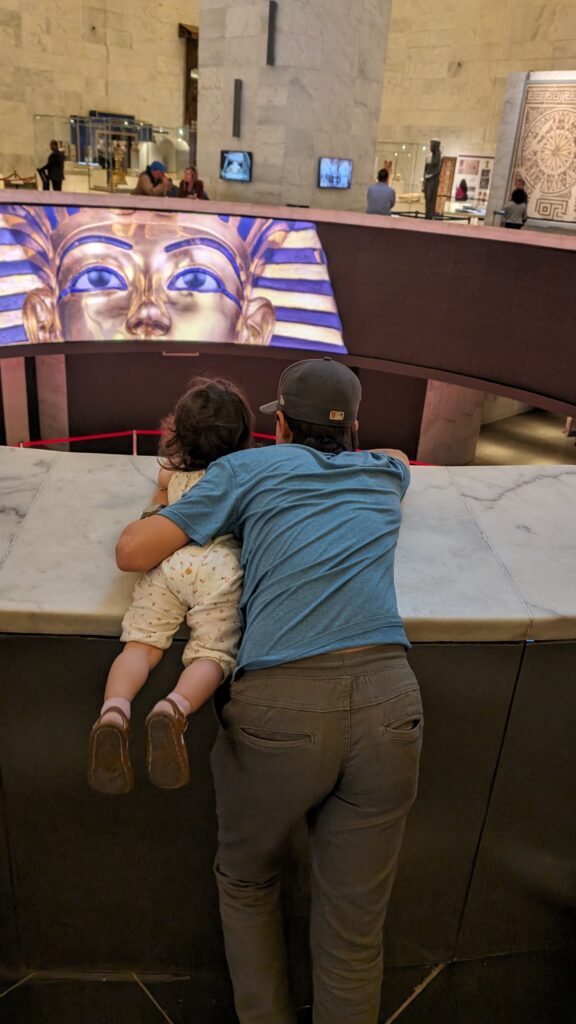
National Museum of Egyptian Civilization
The National Museum of Egyptian Civilization (NMEC) covers Egypt’s vast history, from prehistoric times to the present day. One of the main attractions of NMEC is the Royal Mummies Hall, where visitors can view the preserved remains of some of ancient Egypt’s most famous pharaohs, including Ramses II and Queen Hatshepsut. It was absolutely mind-blowing to see these actual mummies from literal thousands of years ago. This one of of our kids’ favorite spots!
The museum’s galleries are arranged chronologically, taking you through Egypt’s diverse historical periods, including the Pharaonic, Greco-Roman, Islamic, and Coptic eras. The exhibits feature a wide range of artifacts, from everyday objects to royal treasures, all presented with detailed descriptions in Arabic and English.
This museum is definitely smaller than some of the other main ones, but I think it’s really well worth it for the Mummies Hall alone – do not miss it.

Coptic Cairo With Kids
This historic district, also known as Masr al-Qadima, is home to some of the oldest Christian churches and religious sites in Egypt, many of which date back to the early centuries of Christianity. Here are the spots we visited:
- Hanging Church: This ancient church is one of the oldest in Egypt, dating back to the 3rd century AD, and is named the “Hanging” Church because it was built on top of the gatehouse of the Roman Babylon Fortress, suspended above the ground. The Hanging Church has been a seat of the Coptic Orthodox Pope in the past and remains a place of deep religious significance.
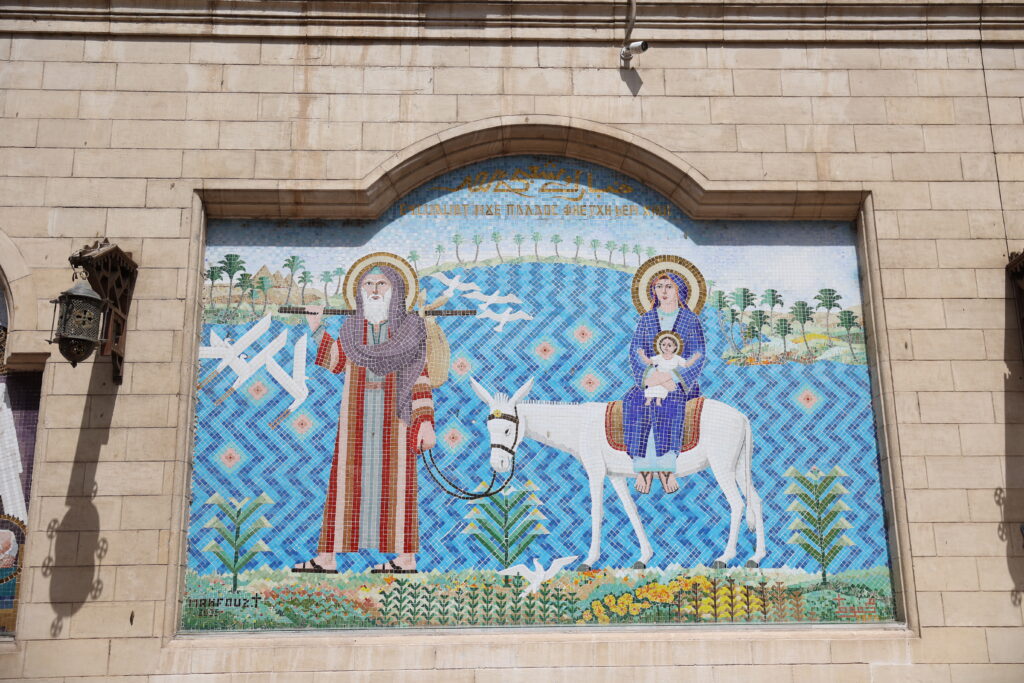
- Abu Serga Church: Said to be built over the cave where the Holy Family—Joseph, Mary, and the infant Jesus—took refuge during their flight to Egypt. The church is also an important stop on the pilgrimage route of the Holy Family in Egypt, making it a must-visit for those interested in biblical history.
- Coptic Museum: Explores the history of Christianity in Egypt, showcasing one of the world’s most extensive collections of Coptic art and artifacts. The museum houses 16,000 artifacts that span the early Christian period in Egypt, from the 3rd to the 12th century.
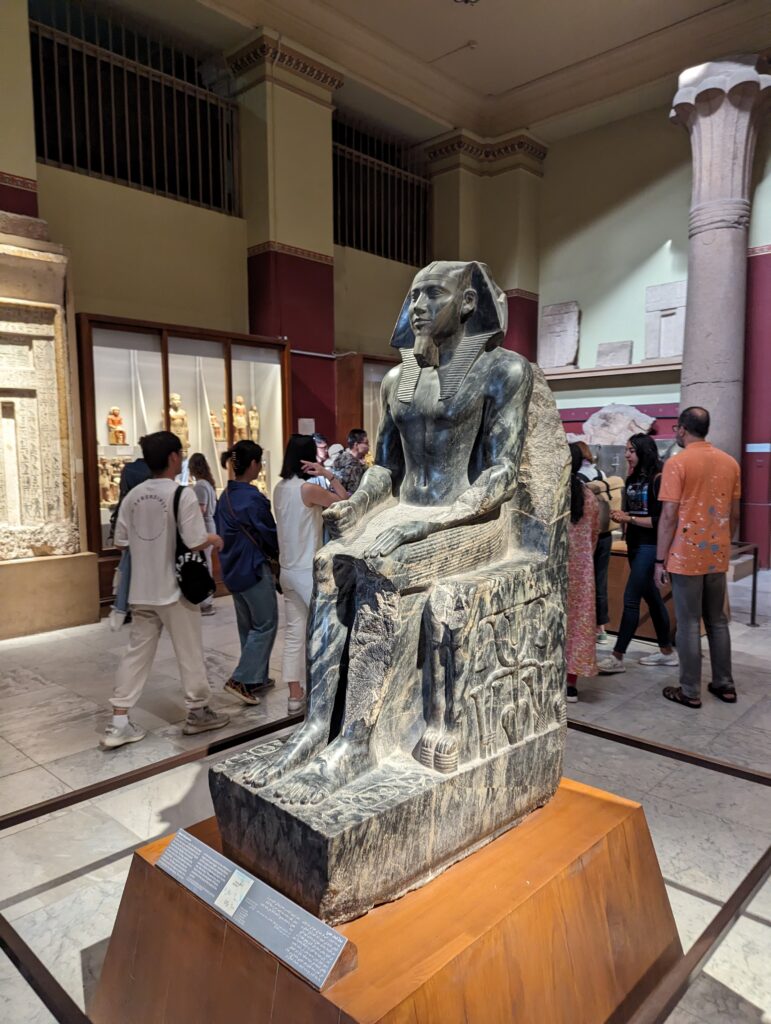
Visiting the Egyptian Museum
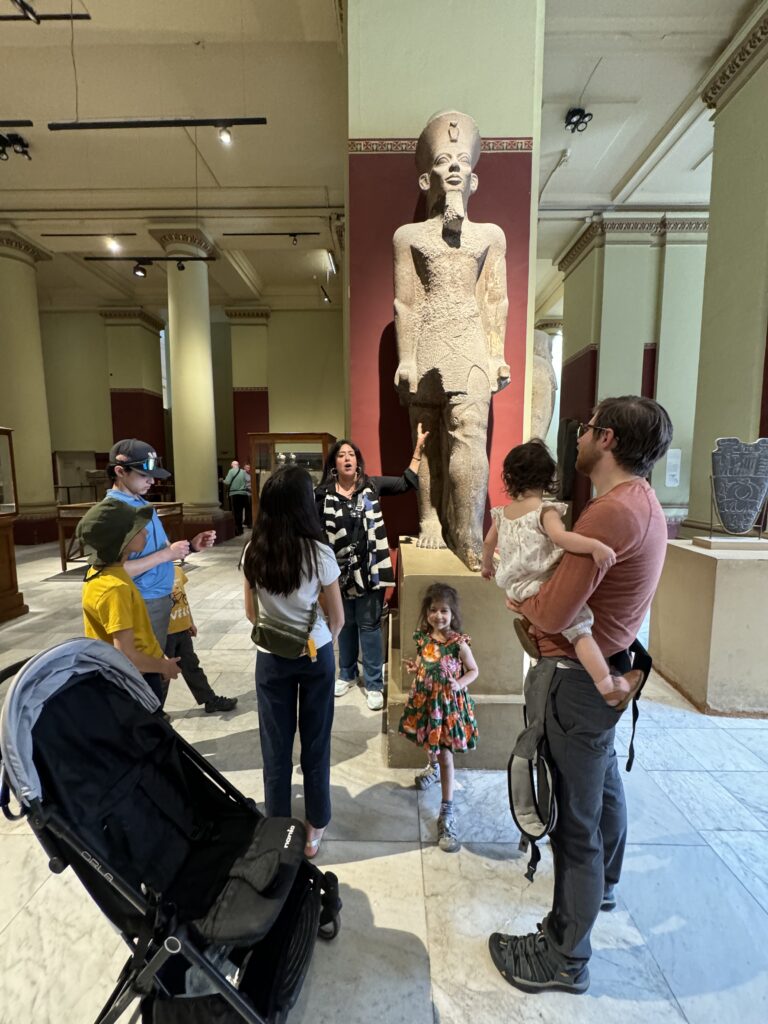
The Egyptian Museum has been a cultural landmark since 1902 and houses over 120,000 artifacts – one of the world’s largest and most comprehensive collections of Pharaonic artifacts.
For years, the museum’s most famous collection was the treasures of King Tutankhamun, including his iconic gold funerary mask, jewelry, and the exquisite items found in his tomb. As of October 2025, these have now been fully moved over to the Grand Egyptian Museum in Giza, but I think it’s still a worthwhile stop with tons of other ancient treasures. Other highlights include the Animals Mummies room, which was definitely a unique experience and my kids found fascinating. I will say, since this museum is quite old and was a landmark for ages, there is TONS of stuff crammed in her with very little signage or explanation; it was definitely really helpful to have a guide walking us through some of the highlights and to share what everything was.
Walking Tour of Medieval Cairo + Khan el-Khalili Market
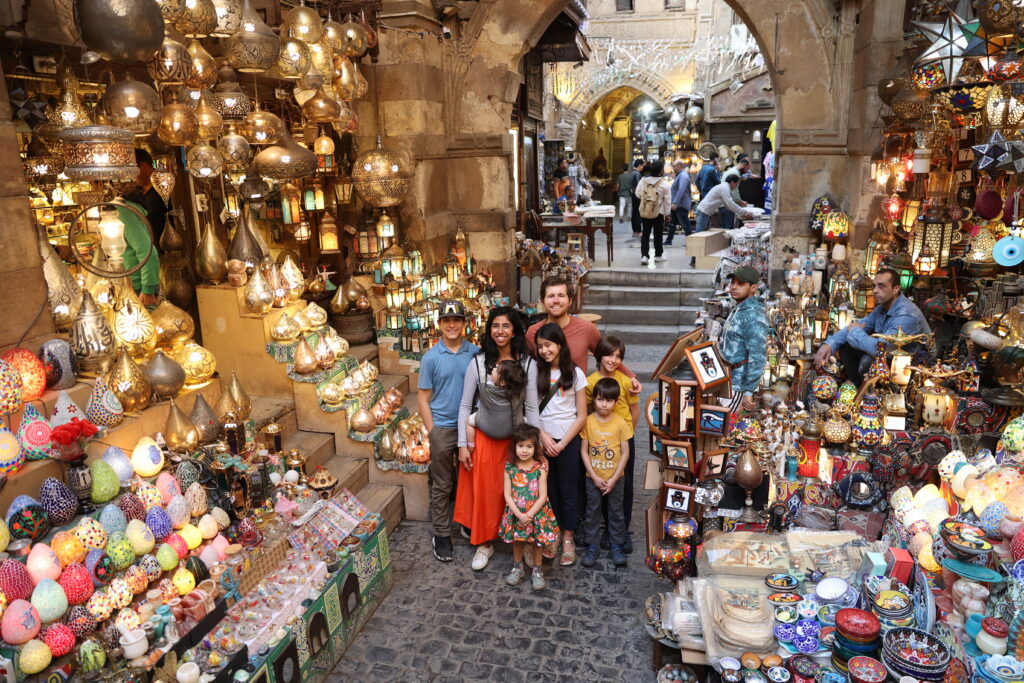
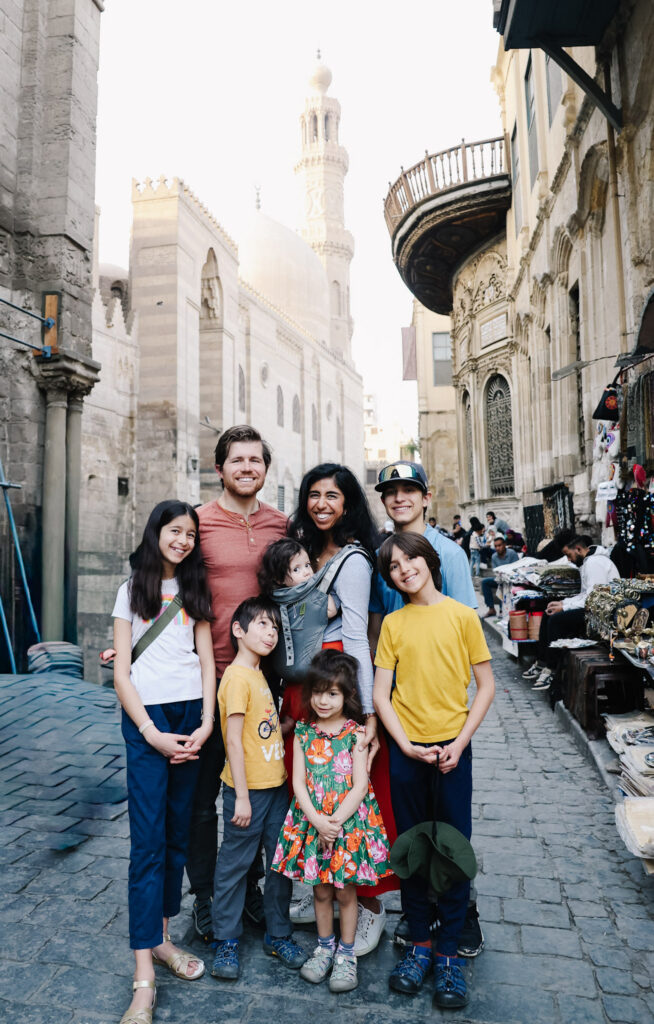
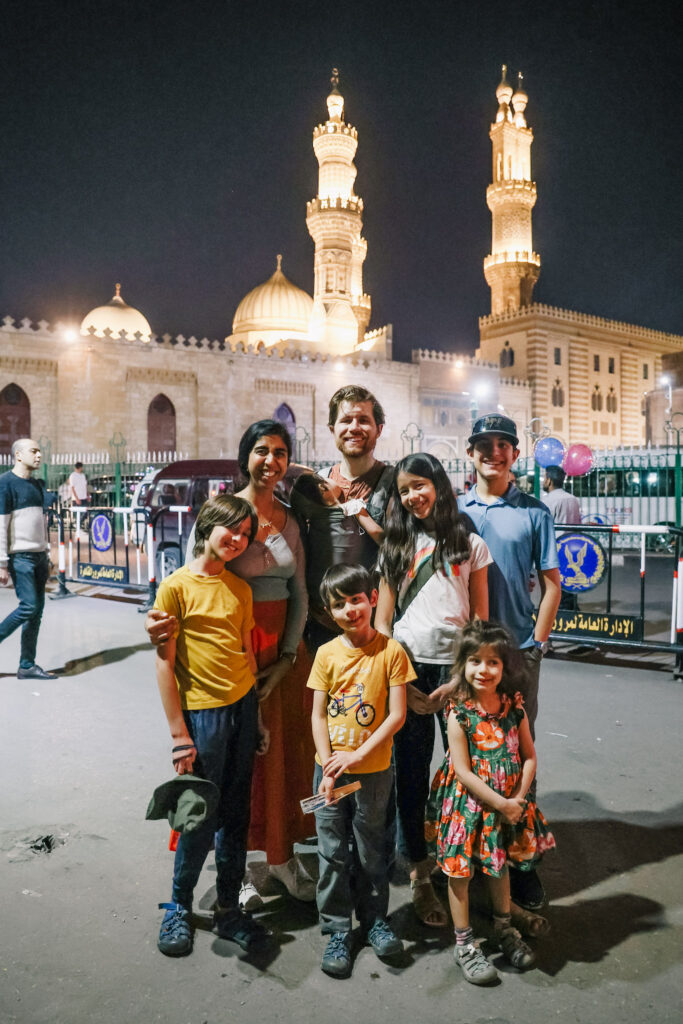
Next we explored El Muizz Street in the heart of Islamic Cairo. This vibrant street is one of the oldest in the city, dating back to the 10th century, and it is often regarded as an open-air museum due to its density of historic mosques, madrasas, mausoleums, and palaces. Some of the landmarks we saw were the Al-Hakim Mosque, the Qalawun Complex, and the Al-Azhar Mosque, each offering unique insights into Cairo’s religious and cultural history. We also passed through souks full of traditional crafts, textiles, spices, and jewelry, adding to the lively atmosphere.
Climbing the Minarets at Bab El Zuweila
We wanted to end our day with climbing the minarets at Bab El Zuweila, one of the ancient gates of Cairo, but ran out of time. But if you can squeeze it in, this gate dates back to the 11th century and is the last remaining southern gate of the medieval Fatimid city. The two imposing minarets that flank the gate provide a unique opportunity for visitors to climb and experience a panoramic view of Islamic Cairo.
The climb up the narrow, winding staircases of the minarets can be a bit of an adventure, but it’s well worth the effort. As you reach the top, you’ll be rewarded with sweeping views of Cairo’s maze of historic buildings, domes, and minarets, with the skyline stretching out toward the modern city in the distance.
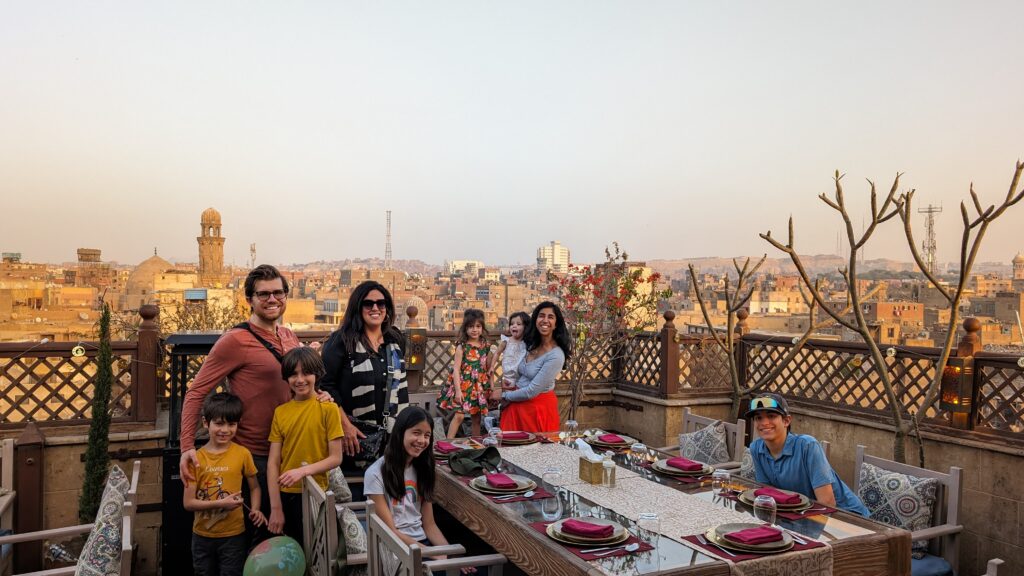
Instead, we ended the night with a super lovely dinner with our guide with a gorgeous view overlooking the old city. It was a perfect evening!
This night, we drove out to stay at a hotel close to the Pyrimids in Giza so we could start bright and early the next morning. This was a great choice as then we didn’t have to battle morning traffic from Cairo to Giza and got there before it got very crowded (the queue when we were coming out of the Great Pyramid, which we did first thing, was about 6 times as long as when we went in!). We really loved this hotel – super family friendly with a couple of really terrific pools, super comfortable and spacious rooms, etc. We loved it and highly recommend it! We stayed at this hotel on points, mostly from THIS CREDIT CARD (referral link), which is our favorite and has been our go-to card for years and years.
Day 2: Visiting Giza Pyramids With Kid
Giza Pyramids + Sphinx + Camel Ride
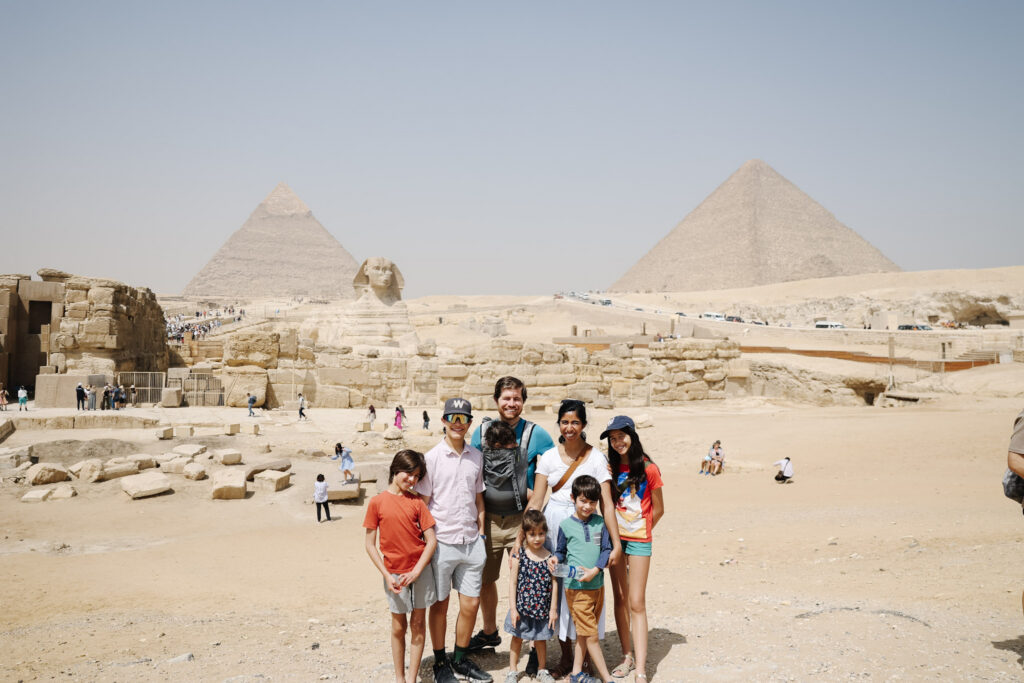
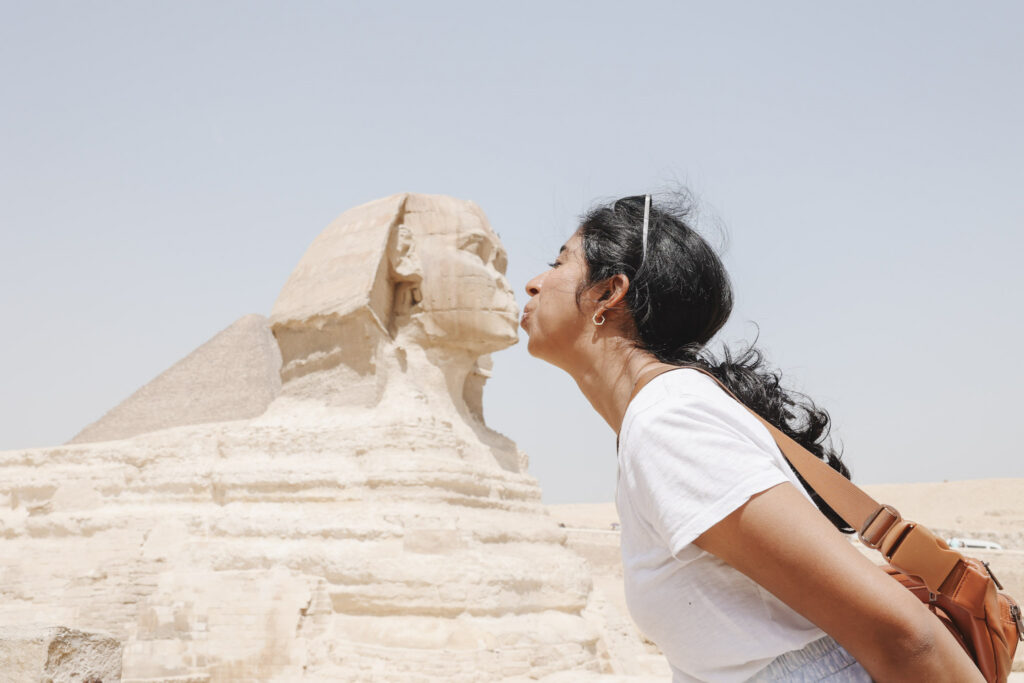
Our second day in Egypt was when we started on seeing some of the bucket list ancient sites we’d so eagerly been anticipating, starting at the Giza Pyramids. Located on the outskirts of Cairo, Egypt, the Giza plateau is home to three massive pyramids—the Great Pyramid of Khufu, the Pyramid of Khafre, and the Pyramid of Menkaure—along with the iconic Great Sphinx. Visitors can explore the pyramids’ exteriors, and with special tickets, enter the pyramids’ narrow passageways to see the burial chambers inside. We were able to enter the Great Pyramid and were immediately overwhelmed with the incredible history and culture.
An important note – tour guides are essential in Egypt. In some places guides are required to enter and a few places they’re not allowed, but even when they’re not, it’s highly recommended as there is so much to learn even from the outside. In Egypt, the guides are Egyptologists and carry extensive knowledge that you won’t find elsewhere and bring a unique cultural perspective. We often DIY our exploring, but were so grateful to have a trained guide with us throughout our time in Egypt – it truly made the experience better by orders of magnitudes and we would’ve missed so much otherwise.
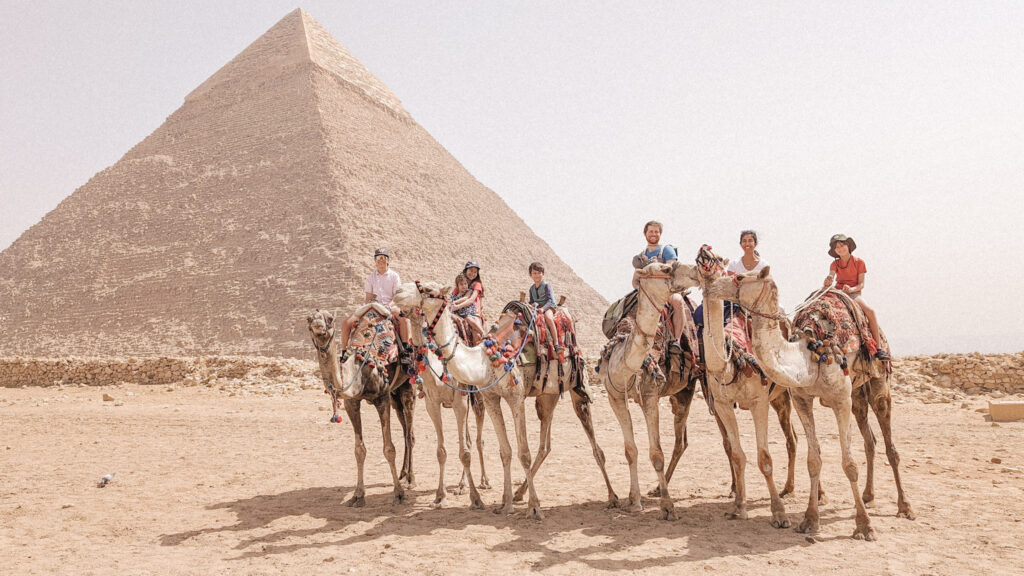
Be sure to make a stop at Panoramic View within the pyramid complex. This elevated spot offers a breathtaking view of all the main pyramids, including the Great Pyramid of Khufu, the Pyramid of Khafre, and the Pyramid of Menkaure, along with the Sphinx. It’s a popular vantage point for photography, providing a wide-angle perspective of the Giza plateau. A great place for memorable family photos!
After visiting the pyramids we took a camel ride. Yes, it’s a touristy activity, but it’s not all that often you have an opportunity to ride a camel!
Grand Egyptian Museum
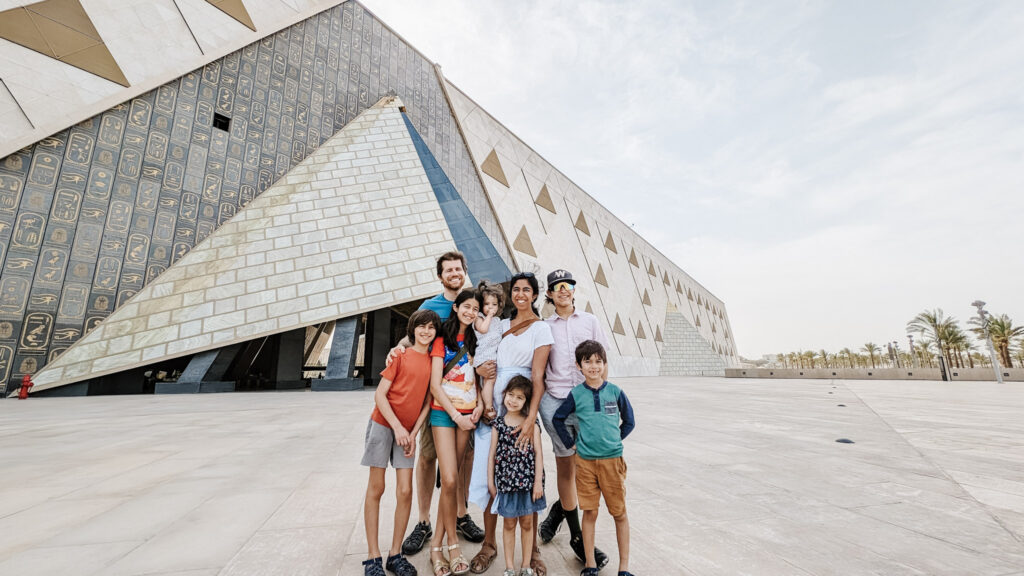
The Grand Egyptian Museum is one of the largest archaeological museums in the world, showcasing Egypt’s rich history. Located near the Giza Pyramids, the museum houses over 100,000 artifacts, including the full collection of treasures from King Tutankhamun’s tomb, which was recently fully moved there from the Egyptian Museum. We found the museum to be immersive and engaging. The exhibits themselves are wonderfully done, but the museum on the whole also is a stunning building. It is a must-visit for anyone interested in Egyptology, as it promises a deep dive into one of the most fascinating civilizations in human history.
Folk Show in El Ghori Caravansary
If you have time and it’s an option, do not miss seeing a folk show at the El Ghori Caravansary (Wekalet El Ghouri). Located in the heart of Islamic Cairo, this historic venue dates back to the 16th century and is absolutely stunning to visit. The highlight of the show is the mesmerizing Tanoura dance, a Sufi-inspired performance where dancers, dressed in brightly colored skirts, spin gracefully in a meditative, trance-like state. Accompanied by live traditional music featuring drums, flutes, and other local instruments, the performance also includes folk music and other forms of Egyptian cultural expression. I was SO sad that it wasn’t playing the days we were there, but I imagine it’s a super unique and unforgettable experience.
Day 3: Visit Saqqara and Travel to Aswan
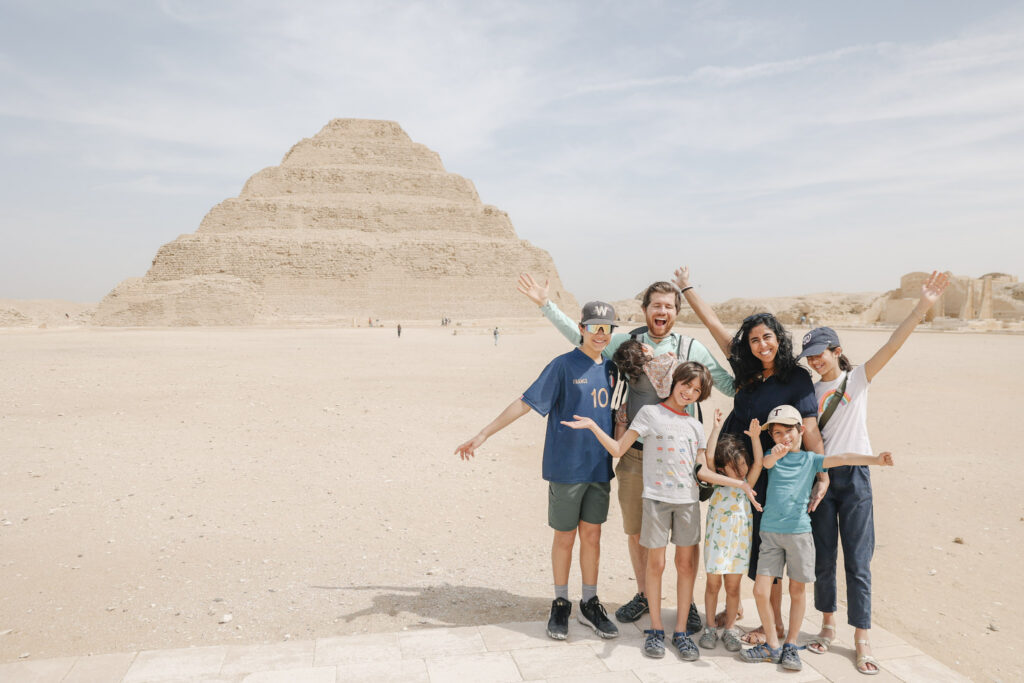
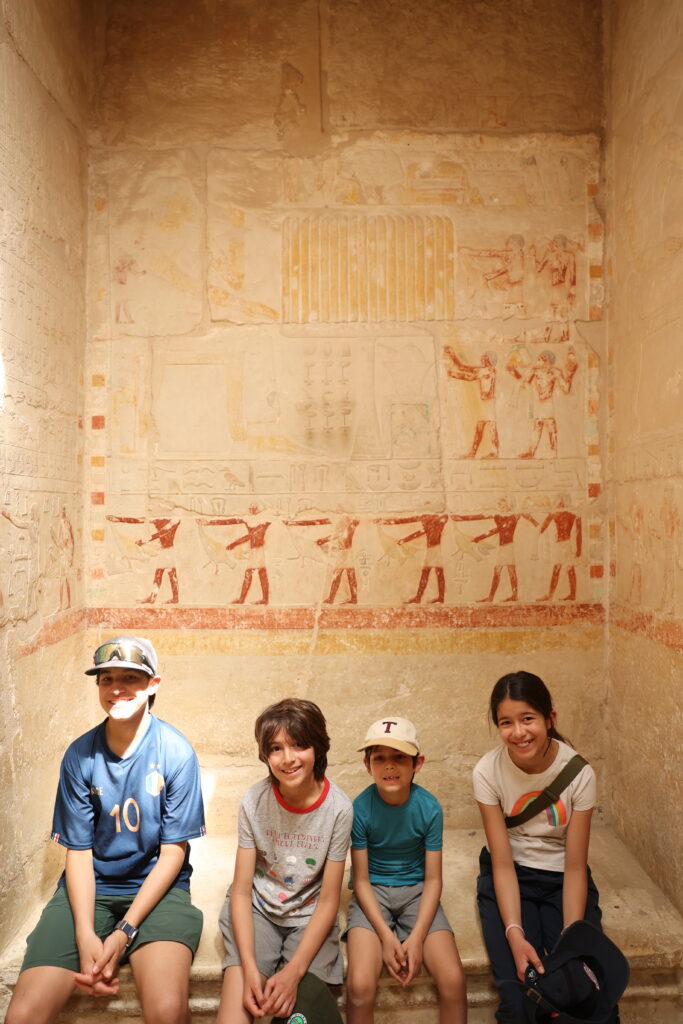
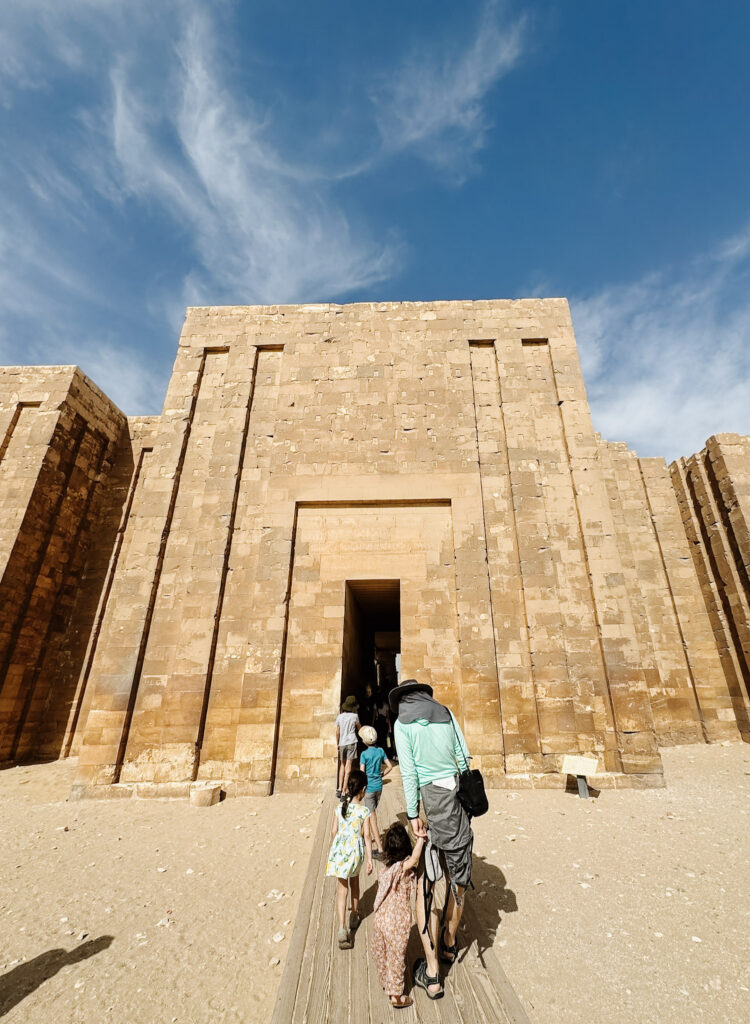
Located about 20 miles south of Cairo, Saqqara served as the necropolis for the ancient capital of Memphis and is famous for its stepped pyramids, tombs, and funerary complexes. Saqqara is a a bit of a quieter alternative to the more crowded sites in Cairo & Giza, but honestly it may have been our very favorite. My mind was absolutely blown by how well preserved the tombs and hieroglyphs were, and my kids could not get enough of it all – it felt much more personal and intimate going into the spaces that we could see so up close. It’s an absolute must visit for anyone at all interested in the history of ancient Egypt.
Step Pyramid Complex
The most iconic structure at Saqqara is the Step Pyramid of Djoser, built by the architect Imhotep during the 27th century BC. This pyramid is considered the world’s earliest large-scale stone construction and is a precursor to the more famous pyramids of Giza. Walking around the pyramid complex, you can explore courtyards, temples, and underground passages that give you insight into the early development of pyramid building in Egypt.
Pyramid Complex of Unas
This may actually have been my favorite spot in all of Egypt. The Pyramid of Unas is one of the first pyramids to contain the Pyramid Texts, the oldest known religious texts in the world. These inscriptions, carved into the walls of the burial chamber, are spells and prayers meant to guide the pharaoh in the afterlife, setting a precedent for later tombs. Visitors can enter the pyramid’s interior and explore the corridors leading to the burial chamber, where these intricate and sacred texts can still be seen. I was absolutely amazed by the intricate carvings and all the colors that were still so clear. Outside the pyramid, the Unas complex also features remnants of mortuary temples, offering insights into the rituals that were performed to honor the dead king.

Other Saqqara Tombs
- Nobles Tombs: glimpse into the lives of high-ranking officials and priests from ancient Egypt’s Old Kingdom. Unlike the grand royal pyramids, these tombs, known as mastabas, were built for the elite of Egyptian society and are celebrated for their detailed and well-preserved wall reliefs and paintings.
- Serapeum: massive underground burial complex dedicated to the Apis bulls, which were sacred animals in ancient Egyptian religion, associated with the god Ptah. A labyrinth of tunnels and chambers where these mummified bulls were interred in enormous granite sarcophagi, each weighing over 60 tons.
- New Kingdom Tombs: showcases the burial practices of high-ranking officials from Egypt’s 18th to 20th Dynasties. These tombs are richly decorated with scenes from both daily life and religious rituals and offer a more personal look at the lives of Egypt’s elite.
Visiting Memphis
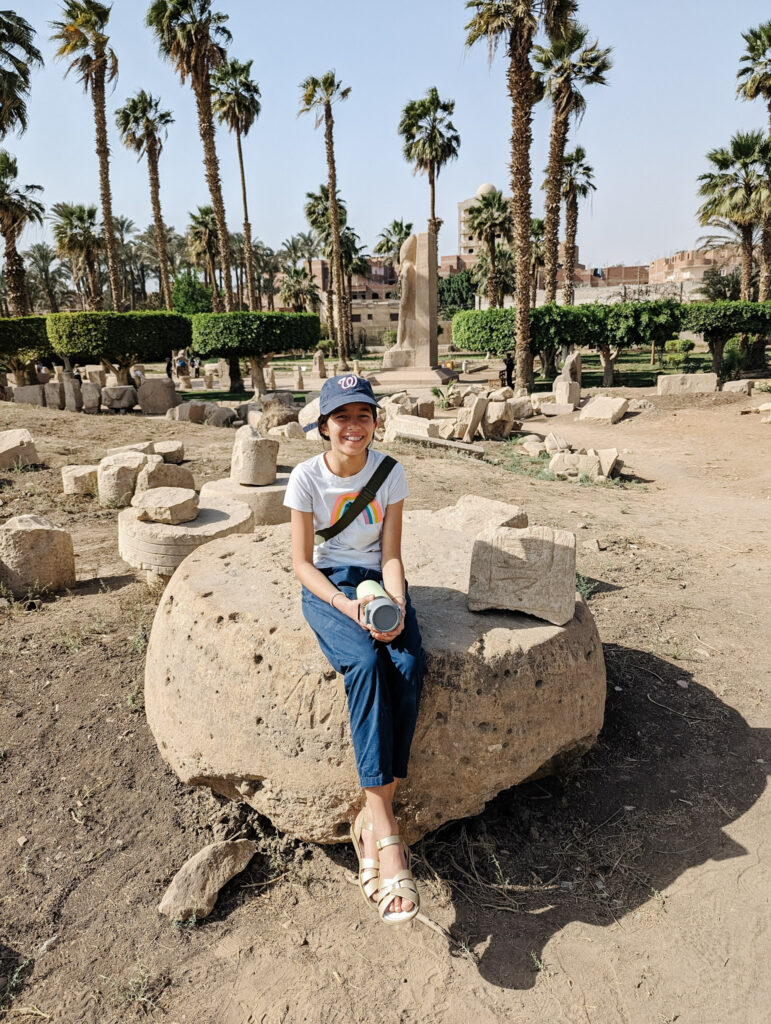
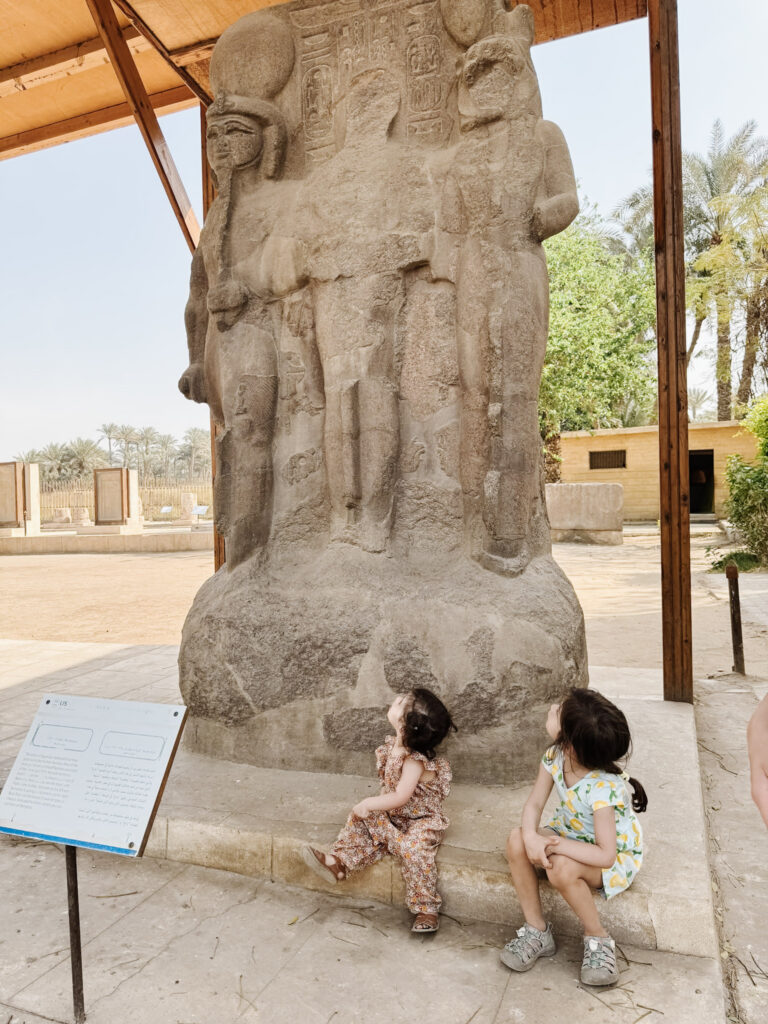
After lunch we headed to Memphis, the ancient capital of the Old Kingdom. Once a thriving metropolis and religious center, Memphis is now an open-air museum filled with remarkable remnants of its grand past. Located near the modern village of Mit Rahina, just south of Cairo, the site is home to the colossal statue of Ramses II, which is one of the most striking artifacts displayed at ground level. This massive limestone statue, originally standing over 30 feet tall, depicts Ramses II in a regal pose, showcasing the detailed craftsmanship and grandeur of the period. The statue is now displayed lying down due to damage to its legs, which actually gave us a better understanding of its incredible size and intricacy.
From Memphis we headed back to Cairo to catch our flight to Aswan.
Day 4: Philae Temple, Nubian Musem & Aswan Souk
Aswan is an absolutely beautiful city set along the Nile River, surrounded by desert landscapes and dotted with small islands. The laid-back atmosphere of this southern Egyptian city allows you to slow down and enjoy traditional Nubian culture, vibrant markets, and charming riverside cafes. The Nubian people are Indigenous to Southern Egypt/Northern Sudan in the Nile Valley in this region known as Nubia. It was fascinating to learn more about this people and culture that was so different from the rest of Egypt and we were grateful to be so warmly welcomed here!
Visiting Philae Temple
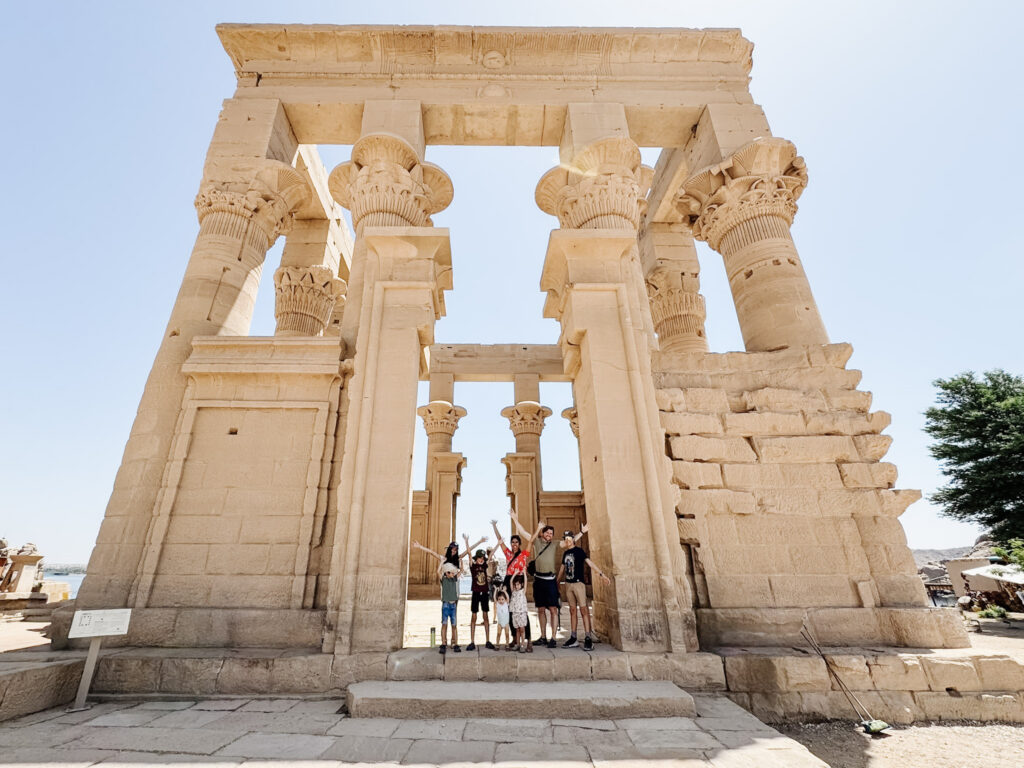
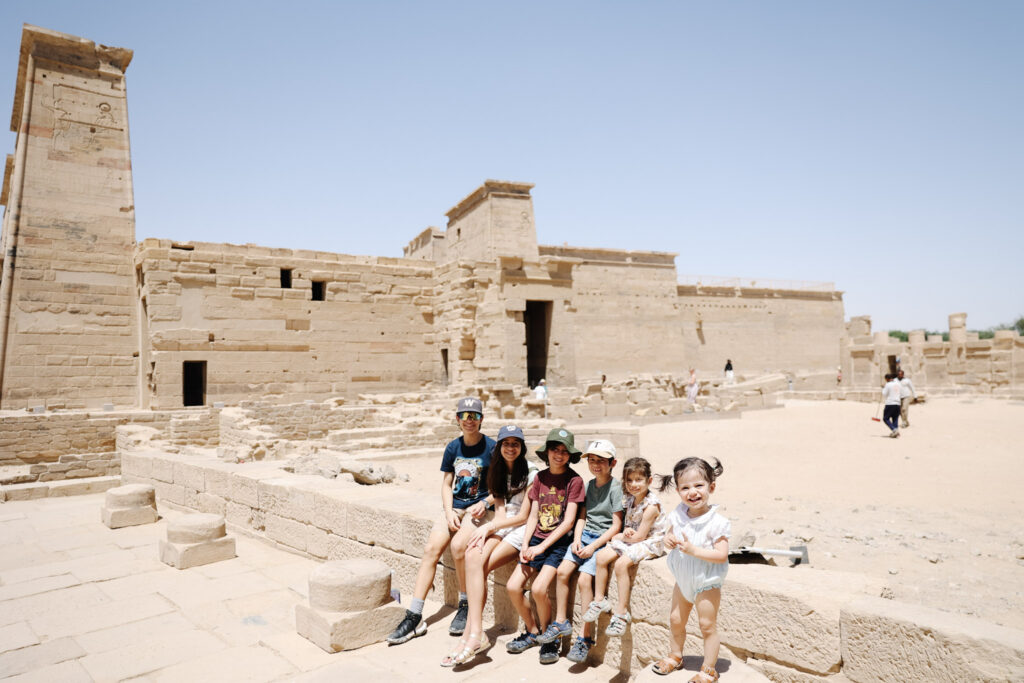
Philae Temple sits on Agilkia Island in the Nile River. Dedicated to the goddess Isis, the temple is renowned for its beautifully preserved reliefs and columns, which depict scenes of worship, mythology, and the life of the gods. The temple complex is accessible by boat, adding to the sense of adventure with kids. One of the highlights of visiting Philae is witnessing its stunning reflection in the surrounding waters – this would make for an excellent spot to catch sunrise or sunset. Our guide was especially fantastic here with telling us lots of stories of ancient Egyptian gods and goddesses – this is one of the parts that stuck with my kids the most and they loved seeing these all come to life.
Unfinished Obelisk and Nubian Museum
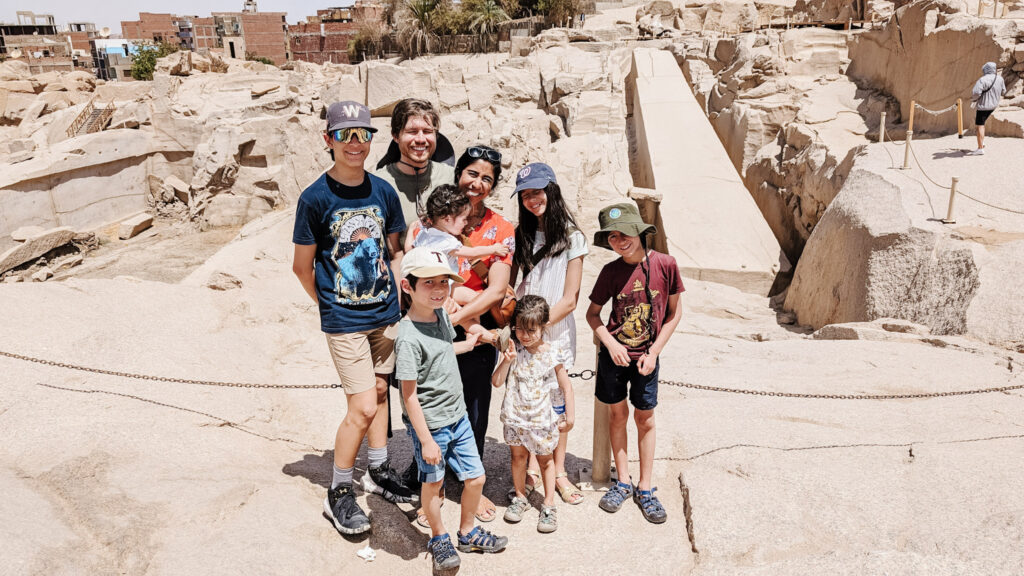
Our next stop in Aswan was the Unfinished Obelisk. This massive obelisk, which would have been the largest ever completed at nearly 137 feet, lies partially carved from the granite bedrock in an ancient quarry. Cracks in the stone halted its construction, leaving it abandoned in place. It’s a unique opportunity to see the tool marks up close and to better understand how these colossal structures were shaped directly from the earth.
The Nubian Museum share the history, culture, and heritage of the Nubian people, who have inhabited southern Egypt and northern Sudan for millennia. Exhibits include everything from pottery and jewelry to tools and statues. The museum also highlights the impact of the construction of the Aswan High Dam, which led to the displacement of many Nubian communities. It was both fascinating and heartbreaking to learn of this progress that harmed so many Indigenous families.
Corniche and Aswan Souk
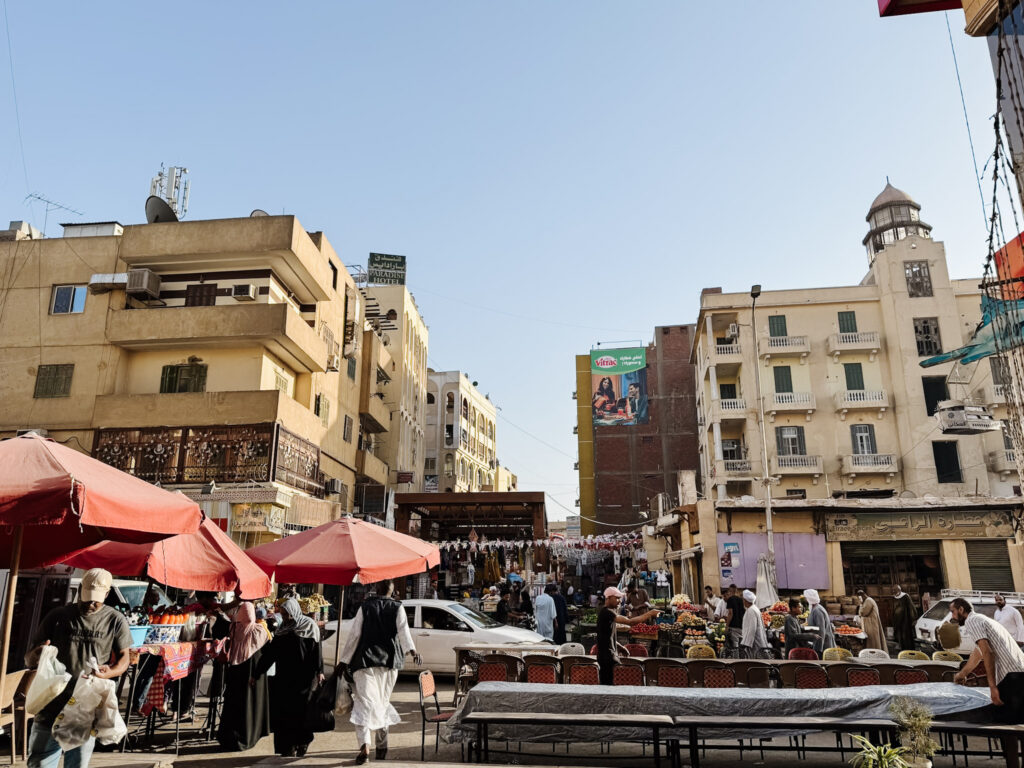
After lunch we did a walking tour of the Corniche and the Aswan Souk. The Corniche is a scenic riverside promenade that stretches along the Nile. You can watch the feluccas sailing and grab a snack at one of the riverside cafes.
Just a short walk away, the Aswan Souk is a lively marketplace. The kids loved wandering through narrow lanes filled with stalls selling traditional Nubian crafts, spices, perfumes, textiles, and souvenirs. The vendors are super friendly and charming. It was a great way to soak up present-day culture and a bit of hustle and bustle (but way less than the market in Cairo) after spending so much time at historic sites.
Day 5: Abu Simbel Temple & Agha Khan Mausoleum
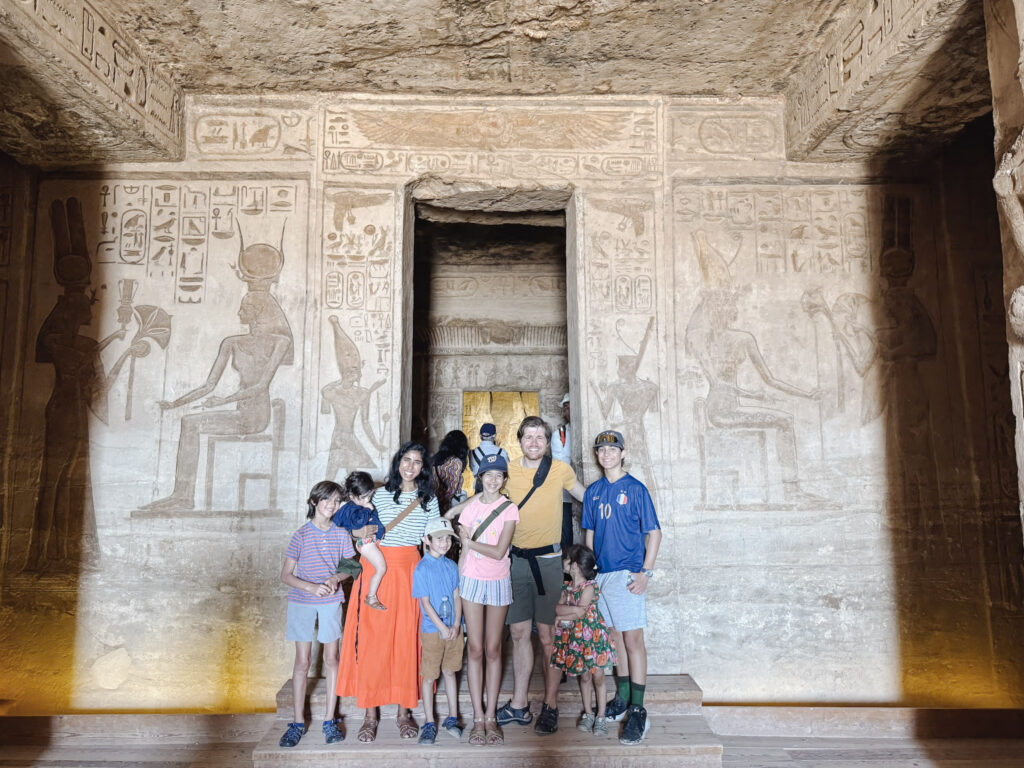
Abu Simbel Temple
On day 5 of our Egypt itinerary we got up extra early to travel to Abu Simbel Temple. It’s a long drive from Aswan (about 3 hours each way), but well worth it to see this incredible UNESCO World Heritage Site.
Located near the Sudanese border, these massive rock temples were originally carved into a mountainside during the reign of Pharaoh Ramses II. The temples, dedicated to Ramses II and his queen Nefertari, are renowned for their colossal statues that stand guard at the entrance, each towering over 60 feet high. These were incredibly impressive to walk through and the kids especially loved seeing how massive they were!
Inside the temples are beautifully preserved carvings and hieroglyphics depicting Ramses II’s military victories and scenes of worship. Twice a year, during the solar alignment phenomenon, sunlight illuminates the inner sanctuary of the Great Temple, a testament to the precision of ancient Egyptian architecture.
Despite being near the rivier, it does get incredibly hot here, which is why most tours will leave super early (I think we left Aswan around 5am). That way, you can explore the incredible sites while it’s still fairly cool and before big tour groups arrive. I’d highly recommend doing it this way! Because we had our pre-arranged driver and guide with us, we were all able to sleep in the air-conditioned van, which worked great for our family.

Felucca Ride on the Nile
We drove back to Aswan for lunch and then wanted a fairly low-key activity for the afternoon after our early morning so we headed out on the Nile! Feluccas are traditional wooden sailboats powered solely by the wind. While you can stay overnight on one, they don’t move super fast, so we were glad to drive between cities and sites and just take a few-hour tour on a felucca this afternoon. Our tour took us past the below sites – we loved seeing them from the wtaer!
- Nobles’ Tombs: glimpse into the lives of ancient Egyptian officials, with beautifully preserved carvings and paintings that depict scenes of daily life, religious rituals, and the afterlife.
- Agha Khan Mausoleum: built in honor of Aga Khan III, the spiritual leader of the Ismaili Muslims. The public cannot enter but the architecture is beautiful to see from the outside.
- Plantation Island: oasis in the middle of the Nile, offering beautiful gardens and palm groves. Would be a great spot for a picnic!
- Old Cataract Hotel: this historic luxury hotel has hosted notable figures, including Winston Churchill and Agatha Christie, who famously wrote part of Death on the Nile during her stay.

Day 6: Elephantine Island & Saint Simon Monastery
Elephantine Island
This island in the middle of the Nile has been inhabited for thousands of years and was an important center of trade and religion in ancient Egypt. We visited the ancient ruins, including the Temple of Khnum and the remains of a Nilometer, which was used to measure the river’s water levels.
We also had the opportunity to do a walking tour of the Nubian villages, including Elephantine Village. We made a stop at Animalia House, a charming, family-run museum that offers an in-depth look at Nubian culture and heritage. While it wasn’t large, it was special to have a personalized tour by the owner, who provided insightful explanations about Nubian history, traditions, and the impact of the Aswan High Dam on their community.
We topped off our visit with lunch in a Nubian home. Our hosts were so welcoming and we absolutely loved getting to visit with them in their colorful home. Plus, the food was incredibly delicious!
Saint Simeon Monastery
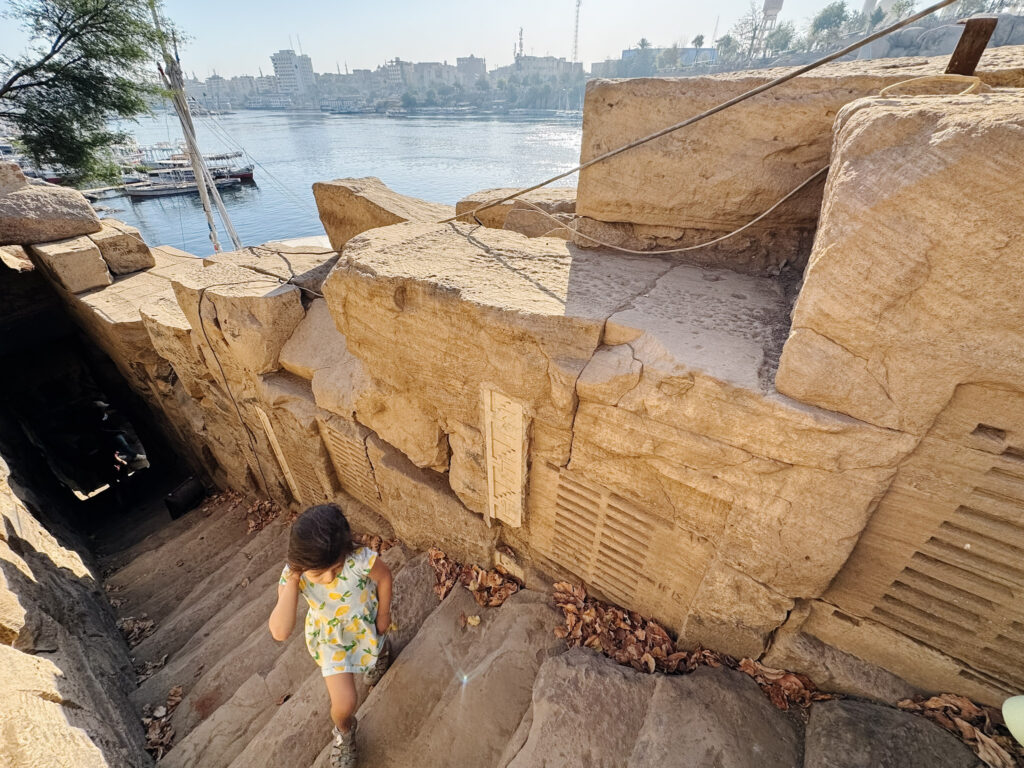
The Monastery of St. Simon felt like a bit of a hidden gem in Egypt. It has an incredible wall surrounding it and you can walk inside to explore – we even saw a colony of bats flying through the dark interior! The little caves and grottos were fascinating to walk through and we loved seeing some of the colorful wall paintings that are still visible. We rode camels to go out to this monastery and it was such a neat experience!
After our visit to the monastery, we hopped in the van to drive up to Luxor.

Day 7: Valley of the Kings
Valley of the Kings offers the opportunity to see up close where many of Egypt’s pharaohs were buried, including the famous King Tutankhamun. It can get really hot, but seeing these tombs up close makes it totally worth it. This is an absolute must do for any Egypt itinerary with kids and we were blown away that we got to actually see these spots in person. Here’s what our day at Valley of the Kings looked like:
- Stop at the Colossi of Memnon: first we made a quick stop at Colossi of Memnon, two massive stone statues of Pharaoh Amenhotep III that have stood guard at the entrance to his mortuary temple in Luxor for over 3,400 years.
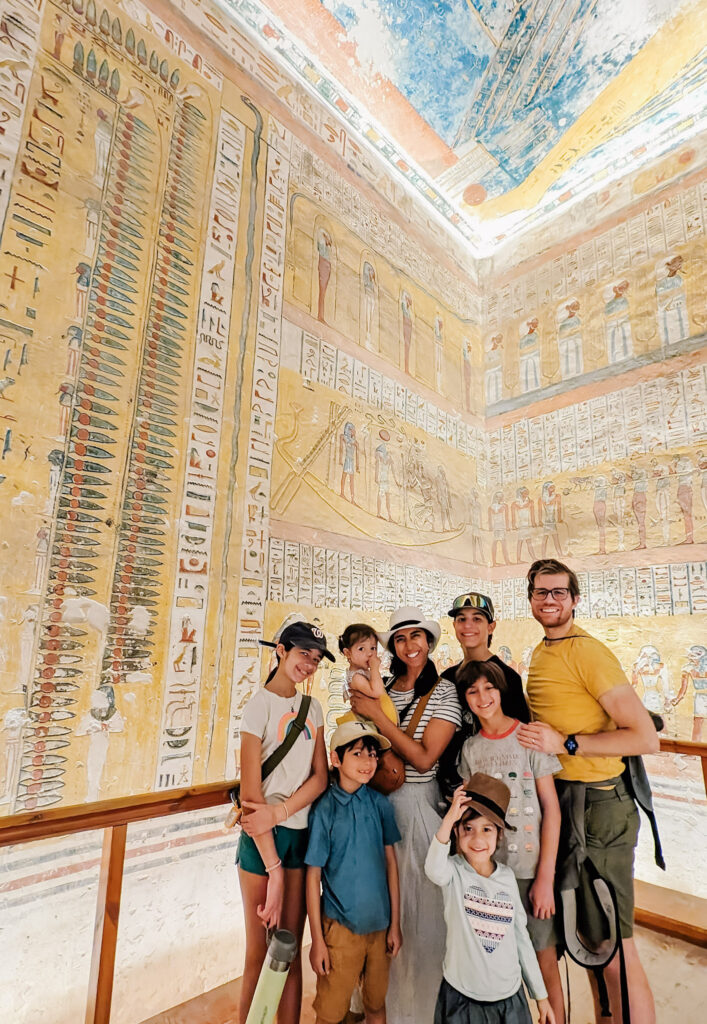
- Tomb of Ramses IV: this tomb is right near the entrance, doesn’t require stairs, and is absolutely stunning. The ceiling is spectacular with stars covering a blue sky and the goddess Nut.
- Tomb of Seti I: known for its stunningly detailed and colorful wall carvings and paintings, which depict scenes from the Book of the Dead and other ancient Egyptian religious texts. The tomb is also one of the longest and deepest in the valley, with a series of well-preserved chambers and corridors leading down to the burial chamber. Good grief, this was absolutely stunning. This one does require a rather expensive extra ticket, but it absolutely felt worth it to us – the level of detail was unbelievable.
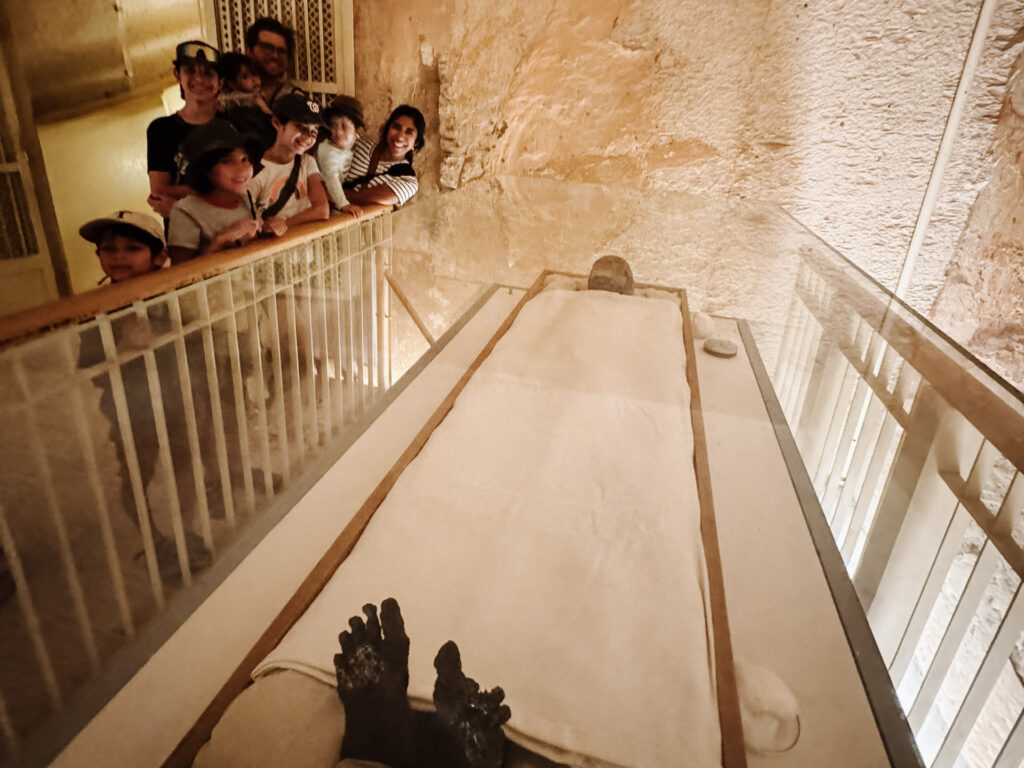
- Tomb of Tutankhamun: one of the most famous archaeological sites in the world! The tomb’s discovery provided invaluable insights into ancient Egyptian burial practices and life in the New Kingdom, making it a highlight for anyone visiting the Valley of the Kings.
- Lunch at a local farmer’s house: We took break for a lovely lunch and brief cooking lesson at a local farmhouse. It was wonderful to connect with the family and have a home cooked meal. The food was so delicious and they were super kind to invite us into their home.
After lunch we headed to the bank of the Nile near Luxor to visit two temples.
Hatshepsut Temple
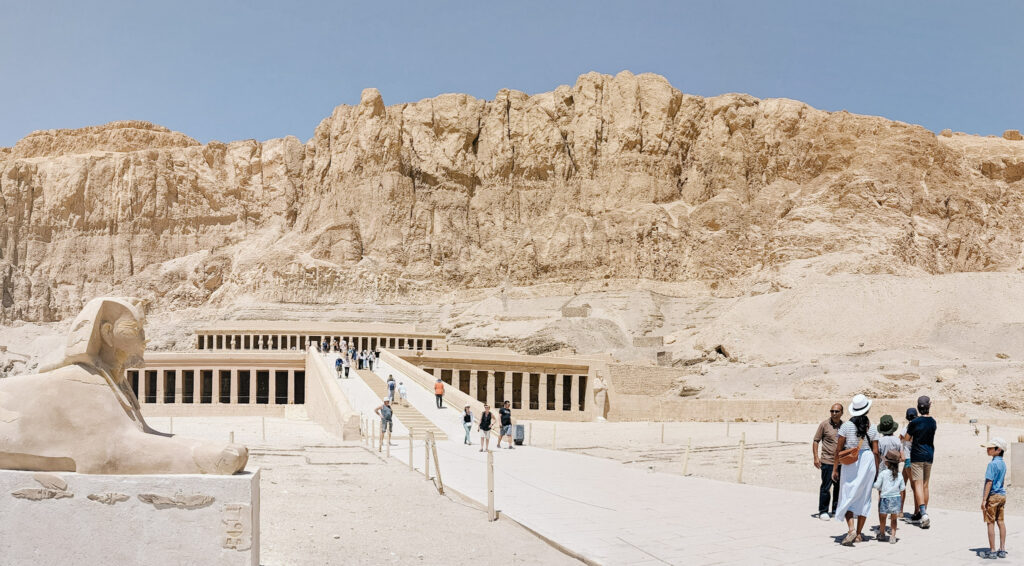
The Temple of Hatshepsut highlights grandeur of ancient Egyptian architecture and provides insights into of one of Egypt’s most powerful female pharaohs. Built in the 15th century BCE, the temple is a series of terraces that rise up to the cliff face, with colonnaded walkways, statues, and detailed reliefs depicting Hatshepsut’s reign, divine birth, and trading expeditions. As you walk through the temple, you can explore its various chapels and sanctuaries, which were dedicated to different gods and goddesses, as well as Hatshepsut herself. The temple’s design and artistry are remarkable, reflecting Hatshepsut’s ambition and legacy as a ruler who broke many of the conventions of her time. I know I keep saying this, but seeing the carvings and paint colors still so intact and beautiful absolutely boggled my mind! This was such an incredible place and I feel so lucky to have seen it.
Visiting Ramesseum Temple
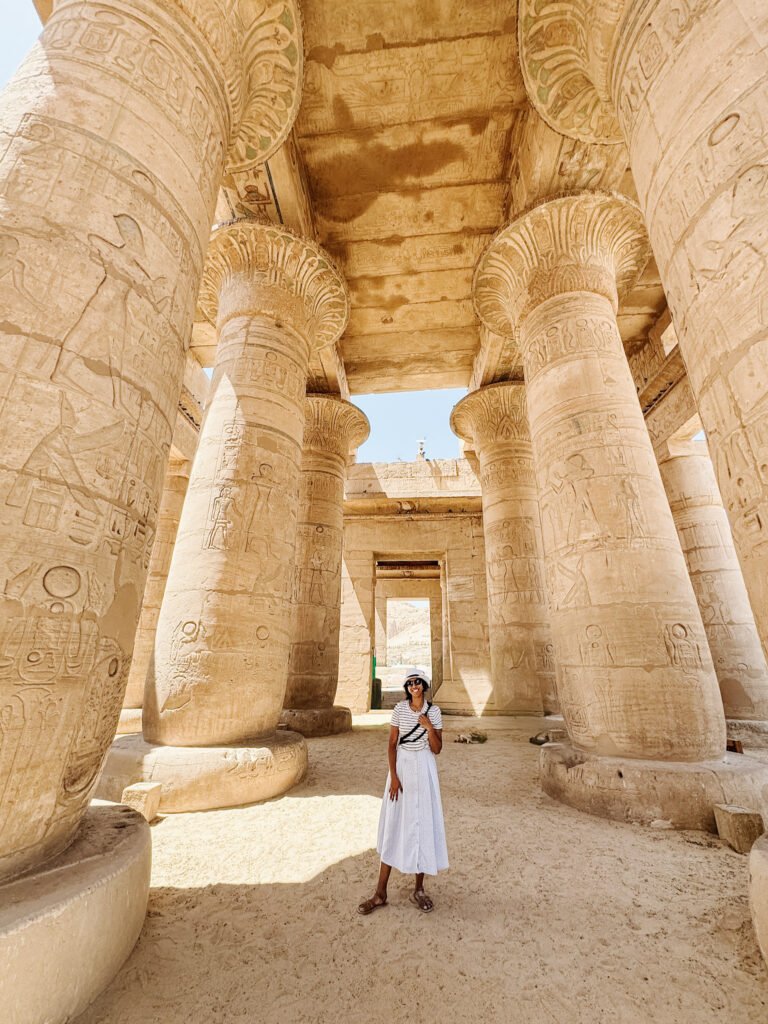
Nearby Hatshepsut Temple is Ramesseum Temple, where you can explore the remains of Pharaoh Ramses II’s mortuary temple. The temple is famous for its colossal statues of Ramses II. The walls are adorned with intricate carvings that depict scenes from Ramses II’s military campaigns, including the famous Battle of Kadesh.
We then headed into Luxor for the night. This is the one day I’d do differently if we were to go again – I’d allot a FULL day for exploring the Valley of the Kings and go into several more tombs, including the ones included in the general ticket. I was disappointed that our tour didn’t allow us sufficient time to explore all of those!
Note that we decided to skip the Valley of the Queens on our visit. Unfortunately, the Tomb of Nefertari closed literally a couple of weeks before we visited due to high humidity levels in the tomb and damage to the ancient paintings. I absolutely understand why they needed to close it to preserve the history and artwork, but it was definitely a bummer to not get to see it. Hopefully we’ll be able to go back someday when it’s reopened! Without this tomb open, it didn’t feel worthwhile to go over to the Valley of the Queens for us, although there are some other unique sites there, as well.
Day 8: Luxor With Kids
Luxor Temple
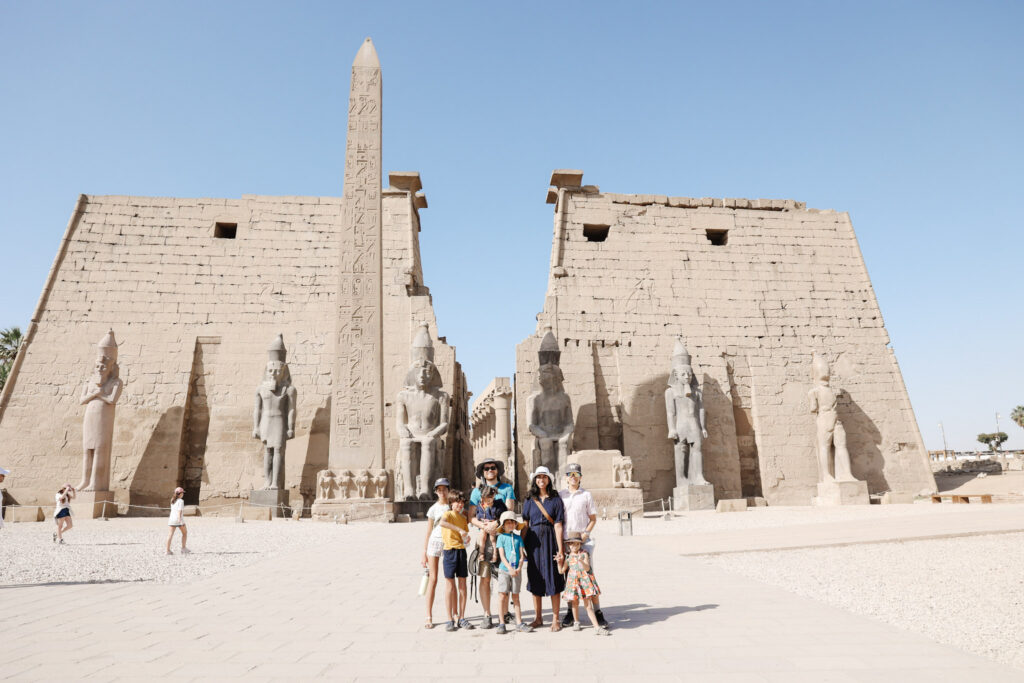
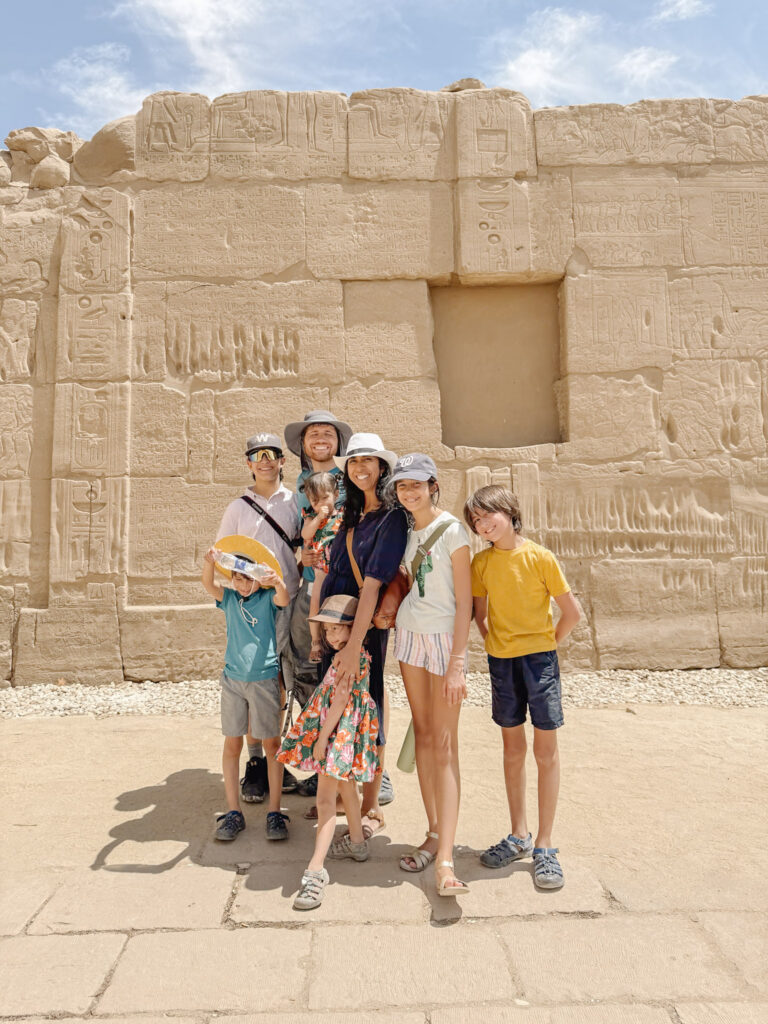
We headed out early to first visit Luxor Temple. Unlike many other temples dedicated to gods, Luxor Temple was primarily dedicated to the rejuvenation of kingship; it was the site where pharaohs were crowned and connected to the divine. As you approach the temple, you’re greeted by the impressive Avenue of Sphinxes, a processional walkway lined with statues that once connected Luxor Temple to Karnak Temple.
Inside, the temple unfolds in a series of grand halls, courtyards, and sanctuaries. The Great Court of Ramses II and the Hypostyle Hall are particularly stunning, with towering columns covered in detailed hieroglyphs and reliefs that tell stories of pharaohs and gods. The temple is also famous for its well-preserved obelisks and the beautiful carvings that depict scenes from the Opet Festival, an important religious celebration in ancient Thebes. Such a neat site!
This temple is smaller than Karnak and gets quite crowded, so we were happy to visit it first thing in the morning while it was cooler and to have it mostly to ourselves for a bit!
Visiting the Luxor Museum
Located on the east bank of the Nile, the Luxor Museum is much quieter and less crowded than many of Luxor’s other attractions, making it an ideal place to explore at your own pace. The museum’s collection includes a remarkable array of artifacts from the Theban temples and tombs, ranging from beautifully preserved statues and stelae to delicate jewelry and everyday objects. Highlights include the stunning statues from the cachette of Luxor Temple, which were discovered buried near the temple in the 1980s, as well as the striking head of Amenhotep III and the carefully reconstructed wall reliefs from the Temple of Karnak.
Karnak Temple
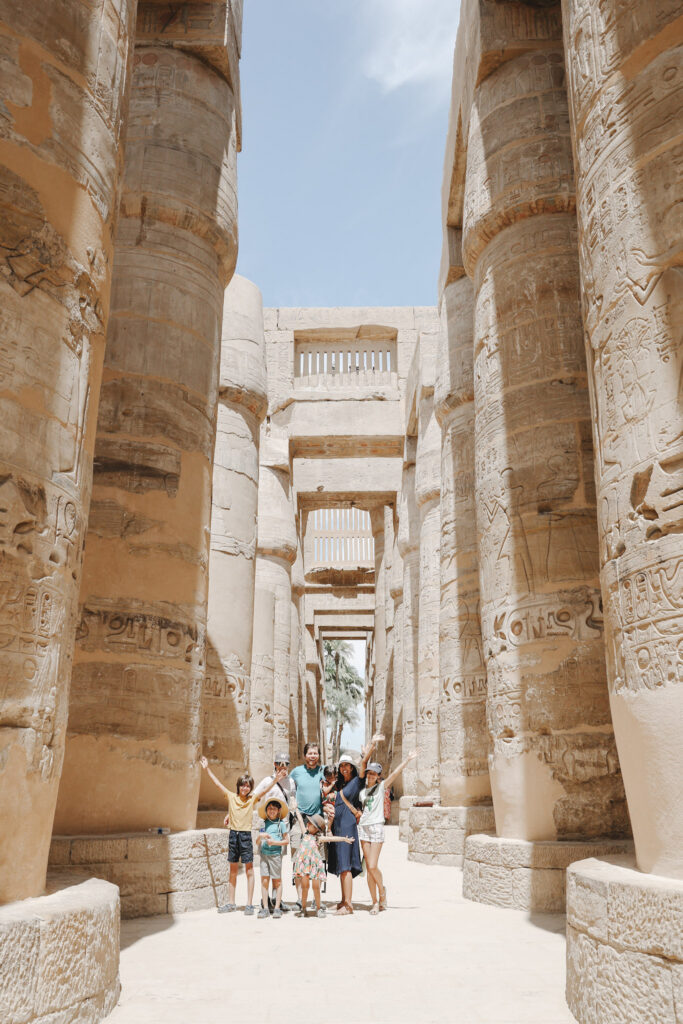
This vast temple complex, dedicated primarily to the god Amun, spans over 200 acres and features a series of grand temples, chapels, pylons, and obelisks that have been built and expanded upon by various pharaohs over nearly 2,000 years. Be sure to check out the Great Hypostyle Hall, a massive hall with 134 towering columns, each intricately carved with hieroglyphs and images that tell the stories of the gods and the pharaohs. There’s also the Sacred Lake, the Avenue of Sphinxes, and numerous other temples and shrines dedicated to different gods and goddesses. This was also such an impressive site in terms of sheer scale – the entry with all the massive statues lining it was so neat!
Luxor Open-Air Museum
The Luxor Open-Air Museum is a treasure trove of ancient Egyptian art and architecture in a more intimate setting. Located within the Karnak Temple complex, this museum showcases a collection of reconstructed temples, statues, and reliefs that were discovered in the area, many of which were buried or dismantled during ancient times. A few recommended stops are: the Red Chapel of Hatshepsut, the White Chapel of Senusret I and the Alabaster Chapel of Amenhotep I.
Day 9: Alexandria With Kids
On day 9 of our Egypt family vacation we got up super early to travel to Alexandria. We flew from Luxor to Cairo, then were picked up by our driver and guide for the day. Known as the “Pearl of the Mediterranean,” Alexandria offers a unique blend of cultural influences from its storied past as a hub of Hellenistic civilization founded by Alexander the Great. Here’s how we spent our day in Alexandria with kids.
Catacombs of Kom El Shoqafa
These catacombs, dating back to the 2nd century AD, are one of the largest and most well-preserved burial sites in Egypt, offering a unique glimpse into the funerary practices of the time. The catacombs are famous for their intricate carvings and statues, which showcase a blend of Egyptian motifs with Greco-Roman influences—like the statues of Egyptian gods depicted in Roman armor. The main chamber, known as the Hall of Caracalla, is particularly striking, with its ornate carvings and a central sarcophagus.
Pompey’s Pillar
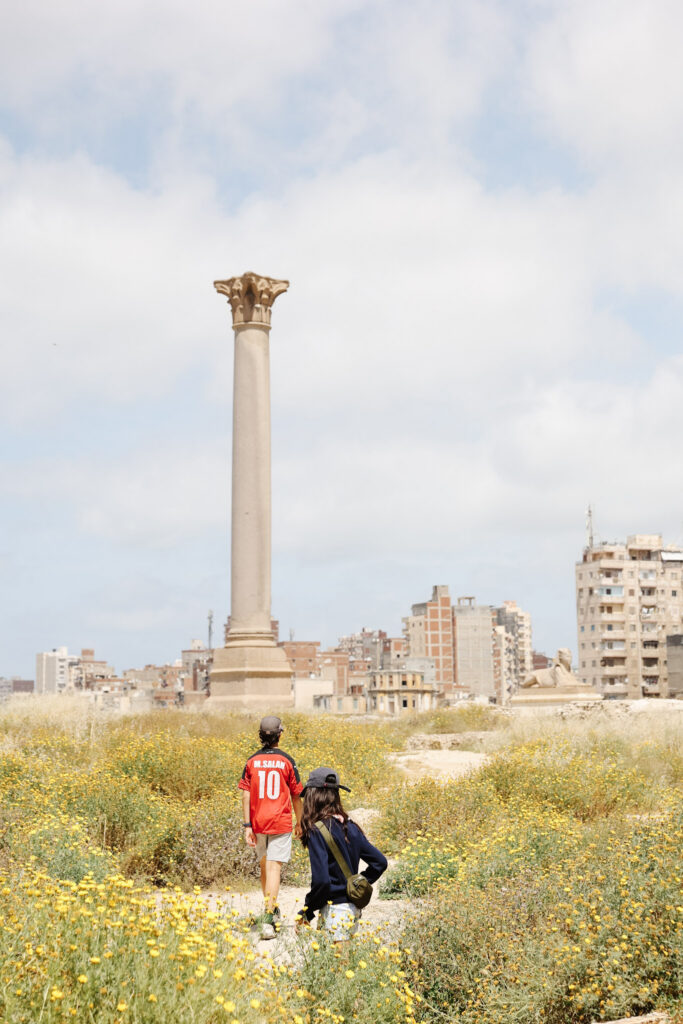
This towering granite column, standing about 88 feet high, is one of the last remaining relics of the Roman period in Alexandria. Despite its name, the pillar has no connection to Pompey the Great; instead, it was erected in honor of the Roman Emperor Diocletian around 297 AD.
The pillar is situated on the site of the ancient Serapeum, a temple dedicated to the Greco-Egyptian god Serapis. While the temple itself was destroyed, the pillar survived and now stands as a solitary monument overlooking the city. The site offers a glimpse into the architectural talents of the Romans, with the massive column carved from a single piece of red Aswan granite.
Roman Amphitheatre
The amphitheatre features 13 semi-circular tiers of white marble seating, which could accommodate around 600 spectators. As you walk around, you can see the remnants of the acoustic niches that helped amplify sound, showcasing the advanced engineering of the time. The site also includes remnants of Roman baths and villas, which was an interesting connection to our recent visit to the baths in Bath.

Royal Jewellery Museum
This is a delightful stop for anyone interested in the opulence and artistry of Egypt’s royal past. Housed in the elegant former palace of Princess Fatma Al-Zahra in the Zizenia neighborhood, the museum is a treasure trove of exquisite jewelry and decorative arts that belonged to the Egyptian royal family during the 19th and 20th centuries. We unfortunately didn’t make it to this stop but think it would be very neat!
Bibliotheca Alexandrina
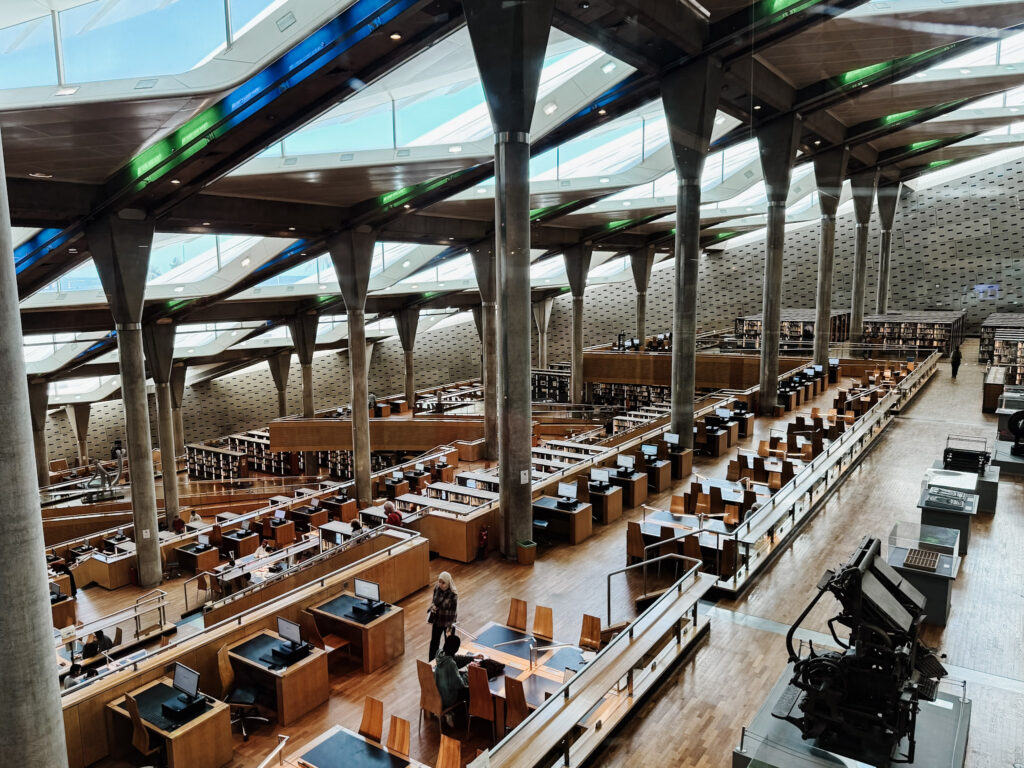
Alexandria’s new library is an architectural marvel and a tribute to the ancient Library of Alexandria, one of the most famous libraries of the ancient world. Opened in 2002, this impressive cultural complex is located on the Mediterranean coast and has quickly become one of Alexandria’s most iconic landmarks.
The library’s design is striking, featuring a massive, tilted disc-shaped structure that symbolizes the rising sun, with a wall of carved stone displaying characters from over 120 different scripts, representing the diversity of human knowledge. Inside, the main reading room is vast and filled with natural light, spread across multiple levels, and can accommodate millions of books. I will say, it’s absolutely nothing like the ancient library of Alexandria, but I think it’s worth a quick stop. Note that there are strict age restrictions – only ages 16+ can go in the main reading room, and visitors under age 4 can’t enter at all. Kids in between those ages can access certain parts, including the Children’s Library. We ended up taking in a couple of our older kiddos and leaving the others with our guide.
Graeco-Roman Museum
This recently renovated museum has an extensive collection of over 40,000 artifacts, including statues, pottery, coins, and everyday objects from Alexandria’s past. The museum’s exhibits chronicle the Hellenistic period, the rise of Roman influence, and how these cultures integrated with ancient Egyptian traditions. Highlights include beautifully crafted marble statues of gods, emperors, and mythological figures, as well as detailed mosaics and inscriptions.
Our busy day ended with a 3 hour drive back to the same hotel where we stayed at the beginning of our trip. If there were a day to cut out from this itinerary, it would for sure be this one. While Alexandria was interesting, it didn’t hold a candle to some of the other spots on our tour. I would’ve for sure rather had an extra day in Luxor!
Day 10: Fayoum Oasis
A couple hours drive from Cairo, Fayoum Oasis is like another world! The oasis is fed by the waters of Lake Qarun and is absolutely beautiful. It’s a refreshing break from the city, with a nice mix of history, nature, and local culture. Here’s what we did while visiting Fayaoum Oasis with kids:
Whales Valley (Wadi Al-Hitan)
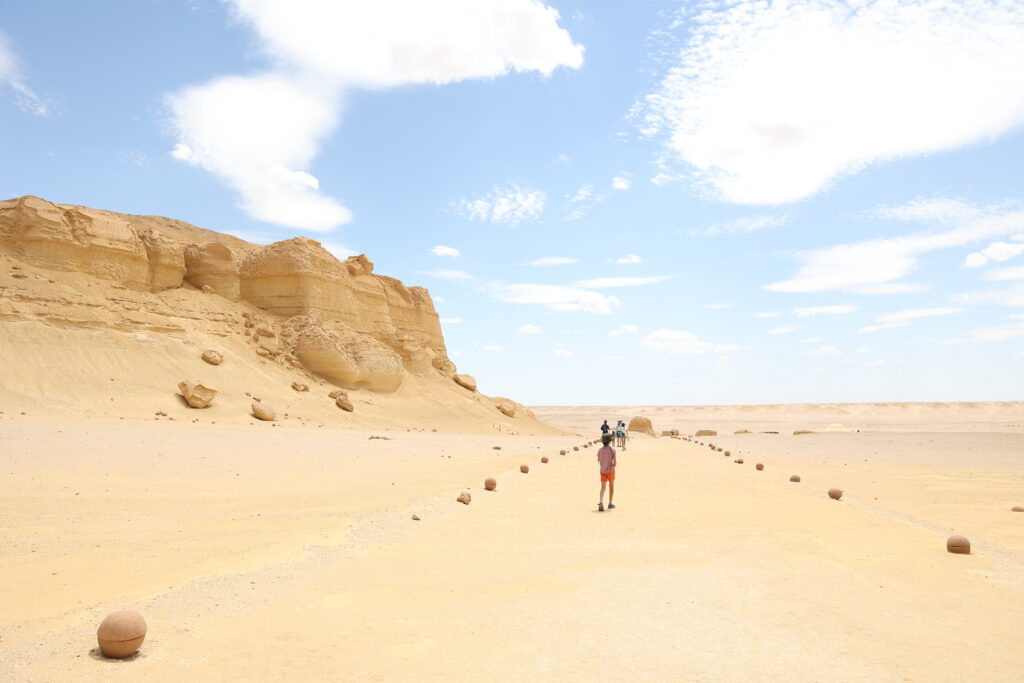
Visiting Whales Valley (Wadi Al-Hitan) is a truly unique experience! This UNESCO World Heritage site is a desert covering what was once a vast ocean. It’s renowned for its extraordinary fossil record, particularly of ancient whale species that lived around 40 million years ago.
We took a hike through the wind-sculpted rock formations. There are marked trails that guide you through the key fossil sites, with informative signs explaining the significance of each site.
We were also able to visit Magic Lake, which is named for its vibrant colors resulting from the mineral content in the water. Surrounded by sand dunes, the lake provides a picturesque contrast to the desert landscape, making it a popular spot for visitors to relax and take in the natural beauty.
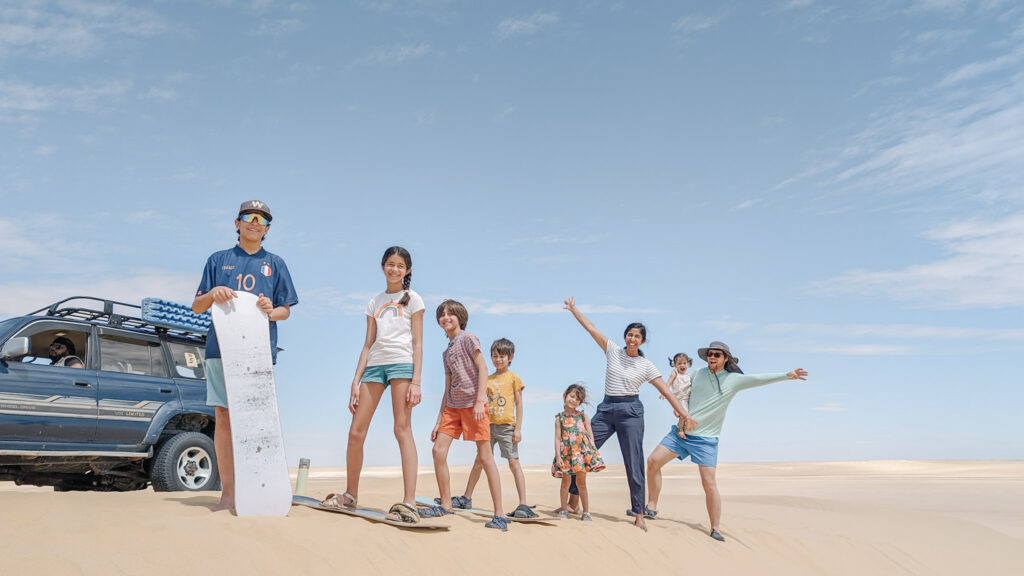
This area is known for recreation, including swimming and camping. But we went sand boarding! It was some of our kids’ first time and it was the most memorable setting for such a fun adventure!
Rayan Valley (Wadi El Rayan)
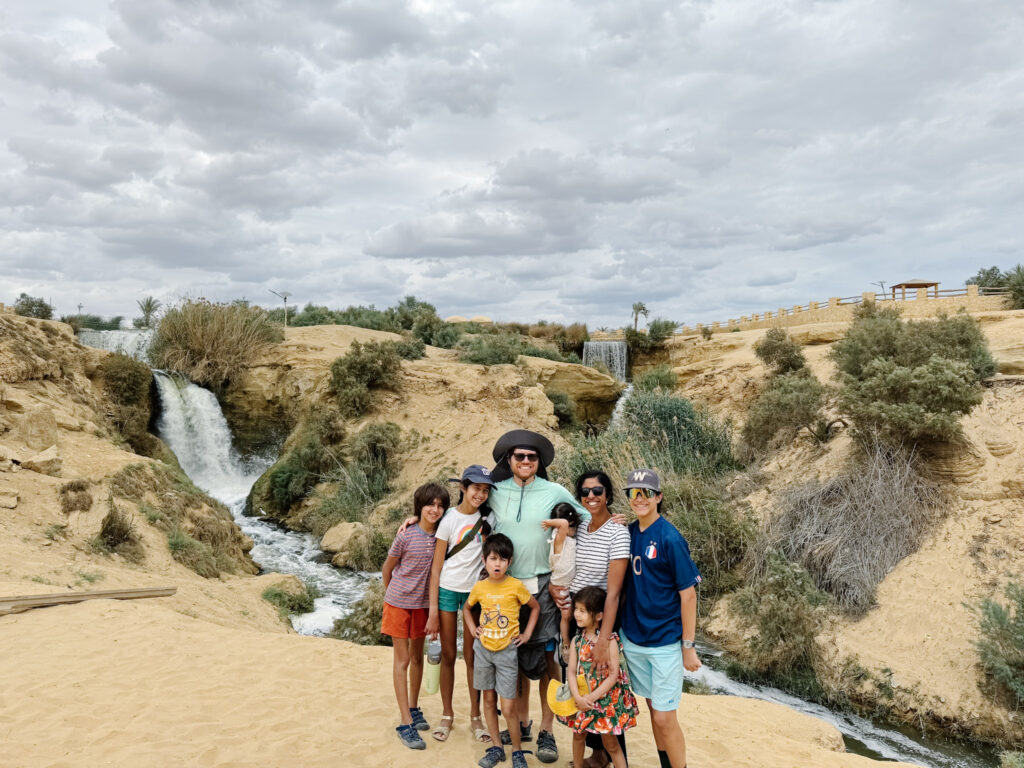
After lunch on the road, we headed to the nearby Rayan Valley. This valley is famous for its twin man-made lakes connected by Egypt’s only waterfalls. The area is a haven for wildlife, including rare bird species. This is another spot where swimming and sand boarding are popular.
Tunis Village, Lake Qarun, Qasr El Sagha Temple, and Dimai
Tunis Village a charming and culturally rich destination that has become famous for its pottery and artisan crafts. We loved looking at all the beautiful pottery! Tunis Village also offers visitors a chance to experience rural Egyptian life. We didn’t have time to stay long, but there are opportunities to do farm stays and traditional meals with families.
This village is on the edge of Lake Qarun. It’s one of the country’s largest natural lakes and is popular among migratory birds. The shores of Lake Qarun are also home to several archaeological sites, including Greco-Roman ruins and ancient temples. We were able to drive by and enjoy the beautiful scenery.
We were also able to view Qasr El Sagha Temple, which is located near the northern shores of Lake Qarun. Unlike many other Egyptian temples, Qasr El Sagha is somewhat mysterious because it was never completed or inscribed, leaving much about its origins and purpose unknown. The temple dates back to the Middle Kingdom, around the 12th Dynasty, but it was likely abandoned before it was fully finished.
Our last stop was Dimai, also known as Dimeh al-Siba, an archaeological site also at Lake Qarun. The site includes the remains of a temple dedicated to the crocodile god Sobek, who was widely worshipped in the Fayoum area. The town was strategically located near trade routes and served as a significant hub for commerce and religious activities.
From there we headed back to Cairo for our long journey home. It was an amazing adventure and I hope this 10 day Egypt itinerary helps you plan your own family trip to Egypt!